Category Uncategorized

MNN Centre for Investigative Journalism under attack

MNN Centre for Investigative Journalism under attack

We at the MNN Centre for Investigative Journalism (MNNCIJ) are saddened to announce that while in pursuit of our mandate — holding those in power accountable and exposing wrongdoing — we recently received shocking notifications that there were attempts to hack into our emails.

The security alert shows that our passwords were used in an attempt to access our email account — mnncij.lesotho@gmail.com – without authorisation, but the attempt was blocked by security layers put in place to secure our emails.

The same attempts were made a few days later on an email address— mokhethiss@gmail.com – used by our Managing Director, Sechaba Mokhethi, and such an unauthorised move was also blocked by the security layers put in place.

While MNNCIJ swiftly moved to secure the organisation’s communications platforms to ensure that all our communication remains confidential, we categorically condemn these acts. They amount to a cowardly bullying tactic employed by those threatened by our investigative work.

We are currently conducting investigations on this security breach attempt and we are not suggesting that certain individuals or organisations are behind this attack.

However, we wish to mention that the attempt to gain unauthorised access to our emails comes after pushback was noted to the following stories:

1.     https://lescij.org/2022/02/25/ngo-boss-accused-of-diverting-projects-funds-to-form-a-party/ the story covered accusations against Mabusetsa Lenka Thamae, the national coordinator for the non-profit Survivors of Lesotho Dams (SOLD), who is alleged to have exploited the organisation’s funds to form a political party that he is now leading. Two weeks after we published this story, Thamae came to our offices threatening to sue us if we did not publish a retraction within a week.

2. https://lescij.org/2022/02/03/trc-boss-sent-home-pending-corruption-probe/, https://lescij.org/2022/02/26/credibility-of-trc-chairperson-questioned/ and https://lescij.org/2022/03/05/trc-board-member-resignsas-peshoane-is-cleared/ the first story was about letter of grievances sent by staff of the Transformation Resource Centre (TRC) to their board. This letter was “accidentally shared” into MNN’s WhatsApp network group by the TRC director, Tsikoane Peshoane. After we published this story, Peshoane called our managing director complaining about a litany of issues. Key among those was that he was not expecting the MNN to put him “in the same bracket with politicians” when it delivers its key mandate to expose corruption and wrongdoing to promote accountability and transparency. He expected special treatment. It is worth noting that MNN is a tenant to the TRC, renting one of its office spaces.

At the height of the investigations on Peshoane, the TRC staff members accused the board chairperson of underhand tactics to clear Peshoane – the subject matter of our second story. The last article was published after the board cleared Peshoane on all the charges followed by an immediate resignation of a board member. We also worked with NewsDay Newspaper in the production of some of its stories on the TRC.

The Lesotho Council of NGOs (LCN) also weighed in with a statement on “circumstances facing TRC”, mainly condemning how the media had reported on TRC. Prior to its statement, the council convened a meeting of one of its committees in which its attendees took turns to castigate MNN and other media houses, claiming our reporting was an attack on the entire civil society.  

3.     https://lescij.org/2022/01/28/how-corruption-politics-led-lesotho-into-jumping-china-debt/ and https://lescij.org/2022/02/10/working-for-chinese-where-sexual-harassment-is-part-of-the-job/ In this story, we exposed former prime minister Pakalitha Mosisili’s desperate bid to win the 2017 elections, when he ordered the Ministry of Finance to disregard due procedure and swiftly take a M1.3-billion Chinese loan that would see a 91km road built in his home constituency, Tsoelike, which he also represents in parliament. The second piece was on massive human rights violations by the same project under the Chinese contractor. Our journalist and founding member, Billy Ntaote, was subsequently harassed, cyberbullied and threatened with death for publishing his interview with Mosisili.

We take this opportunity to assure Our Partners, Our Sources and Readers that communicating with us remains confidential and secure.

Our mnncij.lesotho@gmail, mokhethiss@gmail.com and all other email accounts of our staff members remain our trusted means of communication that is confidential and secure.

Who we are: MNN Centre for Investigative Journalism (MNN) is a non-profit company registered under the companies’ laws of Lesotho in March 2016. We work towards strengthening the fourth estate in Lesotho, fostering transparency and accountability by deploying investigative journalism and providing training and fellowships to journalists.
What we do: We strive to hold those in authority accountable through our investigative stories. Our stories are mainly about exposing corruption, cronyism, nepotism, the abuse of power and public funds, human rights abuses and misgovernment in Lesotho.
Race for Ndeitunga’s successor heats up

Race for Ndeitunga’s successor heats up

By Tileni Mongudhi | 8 June 2022

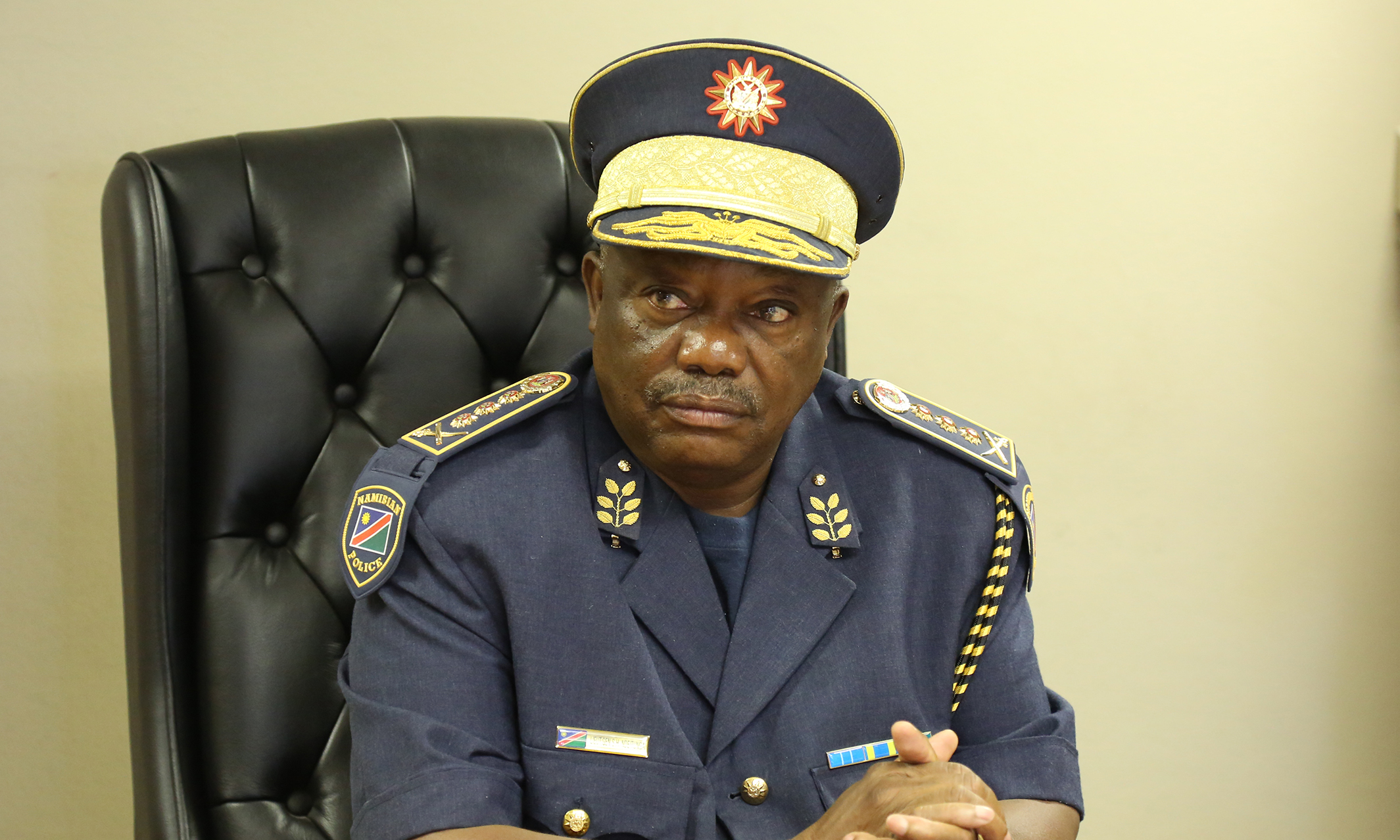
POLICE deputy inspector general for administration major general Anne-Marie Nainda and deputy inspector general responsible for operations major general Joseph Shikongo are said to be front- runners in the race to succeed current police chief inspector general Sebastian Ndeitunga.

The two have been asked to motivate why they are the best candidates for the job of running Namibia’s top law-enforcement agency.

Sources say Nainda appears to be ahead in the race to replace Ndeitunga.

If she succeeds she will make history as the first woman to run Namibia’s police.

The final decision, however, lies with president Hage Geingob, who has the power to appoint an individual outside of the current police top brass.

There is wide speculation within the Namibian Police on who the next leader would be, with an announcement expected to be made next month when the police top brass meet for the senior command conference.

Ndeitunga is preparing for his retirement as police chief, set for August, after being at the helm for 17 years.

POSSIBLE CONTENDERS

Nainda has served longer in the top structures of the police than Shikongo.

She was with Interpol abroad and also served as Oshikoto regional commander before being promoted to major general responsible for police administration in 2017.

However, her colleague has built himself a reputation of being a no-nonsense police officer, being tough on criminals and with the tactical prowess to fight crime.

Shikongo has the international experience of working on peacekeeping missions in Sudan, the Democratic Republic of Congo, and at the United Nations’ head office in New York.

Both officers are said to have been asked to submit representations as to why they should be considered for the police chief post.

This claim was yesterday denied by Shikongo.

He said he was never asked to make such representation and that he has no ambitions of becoming the inspector general.

“I am the deputy inspector general responsible for operations, and I will stick to that. I am not in contention, because I know it is not a contestable post as it is the president who appoints,” he said.

Nainda yesterday said: “I am unfortunately not in a position to comment. Please call general Ndeitunga.”

The writing has been on the wall since last year when Ndeitunga started reshuffling his top brass.

Some of the key appointments were commissioner Elias Mutota, who was moved from the police special branch to head up the Special Field Force.

Commissioner Michael Abraham was transferred from the special branch directorate at the police’s national headquarters to head the Very Important Persons Protection Directorate, and commissioner Petrus Amadhila was transferred from the office of the inspector general as principal staff officer to the special branch directorate at the national headquarters as head of the directorate.

Ndeitunga poured cold water on speculation over who would take over from him.

He said the power to appoint his successor is with the president on recommendation of the security commission.

He said the appointment would be made at the end of his tenure, in August, to enable him to hand over the “instruments of power”.

Ndeitunga, however, said the inspector general would be chosen from the deputies of the incumbent as they are the most senior officers available.

He confirmed that the president and the Security Council can look for a successor externally.

He said at next month’s Senior Command Conference, he would make further promotions and appointments – especially among the regional commanders – since a number of senior officers are retiring.

THE PROCESS

The police chief is appointed by the president on recommendation of the Security Council, but the president has the last say.

The Security Council is a constitutional body consisting of the chairperson of the Public Service Commission, the chief of the Namibian Defence Force, the police inspector general, the commissioner general of the correctional service, the head of the Namibia Central Intelligence Services and two members of parliament, appointed by the president.

The commission works on shortlisting candidates in conjunction with the minister of home affairs, immigration, safety and security.

Potential candidates, even from outside the police, may be asked to apply.

The commission would then make its recommendation to the president, who would then make the final decision.

In 2005 The Namibian reported that Ndeitunga was allegedly specifically hand-picked by former president Hifikepunye Pohamba over then more experienced Junias ‘Jungle’ M’Lukeni, who, at the time, was the deputy inspector general responsible for operations.

Ndeitunga had just been promoted to deputy inspector general responsible for administration a few years earlier after Fritz Nghishililwa was removed, following a scandal.

The option of bringing in someone from outside is also on the cards.

Founding president Sam Nujoma in 1995 picked the late Lucas Hangula from the ministry of home affairs to take command of the police.

Although having been a military man during the liberation struggle, Hangula was a director of civic affairs at the home affairs ministry when he was appointed to run the police.

The post Race for Ndeitunga’s successor heats up appeared first on Investigation Unit.