Britain’s new strategy seeks to curb corruption by cracking down on rogue lawyers, accountants and bankers, tightening oversight and consolidating anti–money-laundering supervision under a single regulator.
The U.K. government launched a more aggressive anti-corruption offensive, vowing to hunt down the lawyers, accountants and financial professionals who help criminals and sanctioned oligarchs launder their wealth through Britain’s economy.
The new strategy outlines more than 120 commitments across government and includes 15 million pounds (over $20 million) in new funding to expand the City of London Police’s Domestic Corruption Unit. Officials say the plan aims to close legal loopholes and strengthen the country’s defenses against illicit finance.
To disrupt professionals who “enable corruption,” the document aims to go after practices such as creating opaque company structures, providing specialized legal or financial services to conceal assets, and knowingly facilitating corrupt transactions. Lawyers, accountants, bankers and trust and company service providers are explicitly named as priority targets for disruption and enforcement.
A key element of the plan is reforming how professional-services firms are regulated for anti–money laundering supervision. Oversight currently spread across 22 separate professional bodies will be consolidated into a new public-sector supervisor—the Financial Conduct Authority—in an effort to close regulatory loopholes and standardize enforcement across legal, accounting and financial sectors. The government says the change responds to longstanding concerns about weak enforcement, inconsistent oversight and gaps that have allowed corrupt or negligent practitioners to avoid scrutiny.
The strategy also pledges tougher enforcement tools, including expanded use of sanctions against professional facilitators, greater intelligence-sharing between the National Crime Agency, the Domestic Corruption Unit and regulators, and the use of artificial intelligence to detect complex networks of enablers.
The government frames the overhaul as essential to protecting national security, ensuring fair business competition and restoring public trust. In Parliament, the security minister said corruption “makes people in the U.K. poorer and less safe,” undermines confidence in institutions, damages the country’s reputation as a place to do business, distorts markets and deters investment.
Transparency International UK welcomed several elements of the plan, including the focus on insider corruption, stronger oversight of the legal and accounting sectors and the creation of new investigative capacity. But the group warned that the strategy still leaves key political-integrity issues unaddressed.
Daniel Bruce, chief executive of Transparency International UK, said the plan “acknowledges that restoring trust in government is ‘the great test of our era’ yet it fails to address the elephant in the room. The U.K. still lacks donation caps and reduced spending limits that would provide genuine insurance against the influence of big money in politics.”
“There is a lack of action on political integrity with the revolving door remaining effectively unenforced for ministers, and leaving Westminster woefully opaque compared to its international peers,” he added.
The strategy also sets out an international agenda, including efforts to strengthen beneficial-ownership transparency, counter illicit finance with global partners and host an international summit on corruption.
Investigation Unit [[{"value":"By OCCRP | 10 December 2025 Britain’s new strategy seeks to curb corruption by cracking down on rogue lawyers, accountants and bankers, tightening oversight and consolidating anti–money-laundering supervision under a single regulator. The U.K. government launched a more aggressive anti-corruption offensive, vowing to hunt down the lawyers, accountants and financial professionals who help criminals and sanctioned oligarchs
The post UK Outlines Tougher Anti-Corruption Measures Focused on Professional Enablers appeared first on Investigation Unit."}]]
By OCCRP | 10 December 2025 Britain’s new strategy seeks to curb corruption by cracking down on rogue lawyers, accountants and bankers, tightening oversight and consolidating anti–money-laundering supervision under a single regulator. The U.K. government launched a more aggressive anti-corruption offensive, vowing to hunt down the lawyers, accountants and financial professionals who help criminals and sanctioned oligarchs
The post UK Outlines Tougher Anti-Corruption Measures Focused on Professional Enablers appeared first on Investigation Unit.
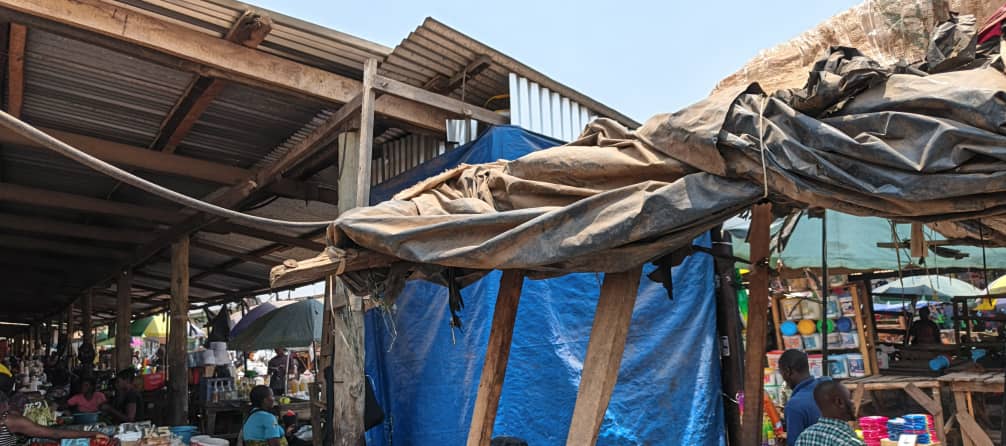
Construction of the long-awaited Kyawama Modern Market in Solwezi has still not begun almost two years after the groundbreaking ceremony, leaving more than 2,000 traders operating in overcrowded and unsafe conditions. The market, which is the largest and busiest trading centre in Solwezi, continues to struggle with poor sanitation, inadequate shelter, and rising congestion despite a government commitment to upgrade it.
Solwezi, the provincial capital of North-Western Province, sits at the heart of Zambia’s mining belt and is home to Kansanshi Mine, Lumwana Barrick, and Kalumbila Mines which has grown rapidly, now accommodating over 332,700 residents, according to the 2022 Census.
With a provincial population exceeding 1.2 million people, markets such as Kyawama play an important role in linking agriculture, mining-related trade, and household commerce. The vibrant market offers fresh produce, spices, household goods, and crafts, but its old infrastructure has failed to match the town’s explosive growth.
Old Market
In December 2024, the Solwezi Municipal Council announced through its official Facebook page that it had approved a K213.6 million budget for 2025, representing a 28 percent increase from the previous year. Within this budget, K47.7 million was allocated for capital projects, including the construction of a fire station, paving of open spaces, installation of streetlights, and, importantly, the long-promised Kyawama Modern Market. However, despite these allocations, the site remains untouched nearly two years after the 2 January 2024 groundbreaking ceremony.
Traders say the delay has made a bad situation worse. Bridget Chinzahu, the Kyawama Market chairperson who has traded there for 20 years, describes daily operations as exhausting and unsafe. She says the market has only four toilets and two bathing rooms, no drainage system, no running water, and shelter that floods or collapses during the rainy season.
“We have over 2,000 traders depending on this place every day,” she said. “We need urgent government action. We can not keep working in these conditions.”
The lack of progress has increased pressure on the Solwezi Municipal Council, which began preliminary steps in October 2025 by identifying a temporary trading site where traders will operate while work begins on the main market site.
According to Engineer Maxwell Chibesa, the Council’s representative, the contractor engaged is Horizon Properties, which is currently clearing land and constructing facilities at the temporary site. The new holding area will include an ablution block with four toilets, a car park, running water, and adequate shelter to allow traders to operate safely while construction on the main market gets underway.
Chibesa explained that the delay resulted from lengthy procurement processes under the electronic government procurement system, which slowed planning and approvals. He said that once traders are moved to the temporary location scheduled for December 2025, the Council will clear the old Kyawama site and begin full construction. The modern market is expected to be completed within 12 months, beginning in September 2025 and ending in October 2026, if all goes according to plan.
The total cost for both the temporary site and the modern market is about K53.5 million (K53,465,545.10), funded entirely through locally generated revenue by the Solwezi Municipal Council. When completed, the new Kyawama Modern Market will feature over 2,000 trading shelters, 60 permanent shops, office space, 32 mobile-money booth spaces, and full water and sanitation services.
A check conducted on site confirmed that work at the new temporary site is progressing, with the contractor on the ground. Engineer Chibesa assured Solwezi residents that the Council will strictly supervise the project to ensure quality work is delivered within the stipulated timeframe.
As traders wait to be relocated and construction to finally begin, Kyawama Market remains overcrowded, vibrant, and essential but desperately in need of the modernisation it has long been promised.
Produced by Radio Kabangabanga in Solwezi for MakanDay. The article has been edited and fact-checked by MakanDay.
By Stanley Fwataki Construction of the long-awaited Kyawama Modern Market in Solwezi has still not begun almost two years after the groundbreaking ceremony, leaving more than 2,000 traders operating in overcrowded and unsafe conditions. The market, which is the largest and busiest trading centre in Solwezi, continues to struggle with poor sanitation, inadequate shelter, and Latest News – MAKANDAY
By Stanley Fwataki Construction of the long-awaited Kyawama Modern Market in Solwezi has still not begun almost two years after the groundbreaking ceremony, leaving more than 2,000 traders operating in overcrowded and unsafe conditions. The market, which is the largest and busiest trading centre in Solwezi, continues to struggle with poor sanitation, inadequate shelter, and
With the rains already falling, unpaid farmers in Fimpulu say they cannot buy fertiliser, seed or labour — putting their livelihoods and the next harvest at risk.
By Ennety Munshya, Frank Mwansa, and Robby Mofya
As the rains begin to fall across Zambia, fields in most rural communities are coming alive with activity. But in Fimpulu, a farming area in Mansa District of Luapula Province, the planting season has opened with unusual silence. Scores of small-scale farmers who supplied maize to the Food Reserve Agency (FRA) say they are stuck at home, unable to buy fertiliser, seed, or labour, because the agency has not paid them for crops delivered months ago.
“We are stranded. We don’t know what to do next,” one farmer said. “FRA is still holding on to our money.”
When government announced that FRA would purchase 543,000 metric tonnes of maize this year, farmers in Mansa were hopeful that timely payments would allow them to re-invest in their fields. But for farmers in Fimpulu, that hope has turned into anxiety.
Aaron Kasompe, 50, a small-scale farmer who has grown maize for nearly a decade, says the delay has plunged his family and farm operations into crisis. He sold 400 by 50kg bags of maize to the FRA in July. He had also acquired a Sustainable Agriculture Financing Facility (SAFF) loan of K60,000, expecting to repay it immediately once FRA credited his account.
Instead, the delay has triggered a financial chain reaction.
“I can’t pay people to begin working at the farm because I do not have money. I am depending on the money that FRA is supposed to pay me for the maize I supplied to them. I saved some money in my bank account to enable me to kick-start farming this season, but that money has been withheld by the bank because my SAFF loan has not yet been settled,” Kasompe said.
The bank has now frozen his savings pending loan repayment, putting the planting season at risk.
Grace Nkandu, 65, who supplied 50 bags of maize, also fears for her family’s survival.
“We depend on farming to feed and provide for our family, but if we are not paid by FRA, how do we survive? We don’t know what to do. We are not working. The government needs to help us,” she said.
Nkandu had planned to diversify her field this year by planting cassava and groundnuts. Without her FRA payment, those plans are now impossible.
The Food Reserve Agency officially opened the 2025 crop marketing season in June, setting the buying price at K340 per 50kg bag. The initial target was to purchase 543,000 metrictonnes, at an estimated cost of K3.69 billion, through over 1,400 satellite depots.
But just months later, the agency’s expenditure had ballooned far beyond what had been planned.
According to a ministerial statement delivered by Agriculture Minister Reuben Mtolo on 4 November 2025, government’s increased share of maize purchases, driven by limited private sector participation and a national bumper harvest, had overwhelmed the agency’s budget.
“Due to the bumper harvest experienced in the 2024/2025 season and the limited participation of the private sector in maize marketing, government decided to increase its share of maize purchases,” Mtolo said.
As of 31 October 2025, FRA had purchased about 1.7 million metric tonnes, valued at K11.3 billion, above the original target.
This left an unexpected financing gap of K7.62 billion. To bridge the shortfall, FRA and government engaged commercial banks and secured a K5 billion loan facility intended to clear outstanding payments to farmers. However, the minister did not indicate when the agency would actually pay the arrears.
While Fimpulu farmers represent only a fraction of those waiting for FRA payments countrywide, their situation raises broader questions:
How many farmers nationwide are affected by the delays?
Why did FRA purchase over three times the planned volume without secured financing?
What emergency measures exist to prevent delayed payments during peak farming seasons?
What is the impact on national food security if farmers cannot plant on time?
For small-scale farmers, who produce the majority of Zambia’s staple maize, any delay in planting threatens the 2025/2026 harvest and could fuel future increases in mealie meal prices.
Several farmers interviewed said they now risk losing an entire season because they cannot buy inputs, hire labour, or meet loan obligations.
The ripple effects are already visible, seed and agro-dealer shops report reduced customer traffic, casual labourers are going unpaid, and families are being forced to cut their food consumption as they wait for FRA funds.
The Agriculture Minister has assured parliament that government is “doing its best to ensure the debt owed to farmers is paid within a reasonable timeframe.” But without a clear timeline, uncertainty continues to spread across farming communities like Fimpulu.
For Kasompe, Nkandu, and hundreds of others in Luapula, every passing day brings the fear that their fields will remain unplanted, and their families unsupported, long after the rains have settled.
National Association for Smallholder Farmers Executive Director Frank Kayula says the delayed payments show how volatility the agriculture sector is, making it difficult for the private sector to participate.
Kayula warns that the non-payment will slow productivity and ultimately reduce yields, driving up the price of the staple food and affecting the entire country.
He adds that it is unfair for government to collect maize from farmers without paying them, noting that many farmers depend on this income for their livelihoods.”
Produced by Radio Yangeni in Mansa for MakanDay. The article has been edited and fact-checked by MakanDay.
With the rains already falling, unpaid farmers in Fimpulu say they cannot buy fertiliser, seed or labour — putting their livelihoods and the next harvest at risk. By Ennety Munshya, Frank Mwansa, and Robby Mofya As the rains begin to fall across Zambia, fields in most rural communities are coming alive with activity. But in Latest News – MAKANDAY
With the rains already falling, unpaid farmers in Fimpulu say they cannot buy fertiliser, seed or labour — putting their livelihoods and the next harvest at risk. By Ennety Munshya, Frank Mwansa, and Robby Mofya As the rains begin to fall across Zambia, fields in most rural communities are coming alive with activity. But in
A Public Accounts Committee report recommends that a lease at Queen Mamohato Memorial Hospital in Maseru should be terminated because of procurement irregularities. Photo: Sechaba Mokhethi
Parliament blocked the tabling of a Public Accounts Committee report on procurement irregularities in the awarding of a contract to operate a private wing at Queen Mamohato Memorial Hospital.
The report found that Tsebo Health Solutions, a company only registered after bids closed, was awarded the contract.
The wife of the foreign affairs minister, Maitumeleng Mpotjoane, sat on both the evaluation and procurement committees.
The committee recommended terminating the agreement within 30 days, a full audit by the Auditor-General within 60 days, and disciplinary action against implicated officials.
These recommendations might now never be adopted by Parliament.
Parliament blocked the tabling of an explosive Public Accounts Committee report on a controversial lease for private healthcare at Queen Mamohato Memorial Hospital.
The report reveals procurement irregularities, conflicts of interest, and questionable decision-making in the awarding of a contract to operate a private wing at the hospital. The wing was to generate revenue for the hospital but was not used.
The hospital issued a call for expressions of interest with submissions closing 30 March 2024. Only two companies – Tsebo Solutions Group Lesotho and Excel Health – progressed past this first stage.
Despite Tsebo Solutions Group having listed no health-related activities in its registration documents, it emerged as the preferred bidder.
But in September 2025 the hospital signed a contract with Tsebo Health Solutions, a different company from Tsebo Solutions Group, and only registered after bids had closed. Tsebo Health Solutions had neither submitted an expression of interest nor participated in the procurement process, and the hospital received no documentation relating to the company.
The report found other critical irregularities in the procurement process that violated numerous sections of the Public Procurement Act of 2023.
Blocked
The Public Accounts Committee had sought to present its findings before Parliament adjourned for the holidays.
On Wednesday, Deputy Speaker Tšepang ’Matlhohonolofatso Tšita-Mosena informed MPs that a request had been made to debate the report’s recommendations. But a split quickly emerged between government and opposition benches. Mootsi Lehata, an MP for the ruling party who also sits on the accounts committee, called for a division.
Only 46 (of 120 MPs) were present; 19 voted for the report to be tabled, 23 voted against, and four abstained. Among the MPs who voted to block the report was Foreign Affairs Minister Lejone Mpotjoane, whose wife appears prominently in the report’s findings.
By Friday, Parliament had adjourned.
In the report, the Public Accounts Committee recommended the termination of the agreement within 30 days, a full audit by the Auditor-General within 60 days, disciplinary action against implicated officials, and expert guidance for future leasing arrangements.
But with the report blocked, these recommendations may never be adopted as resolutions in Parliament.
Irregularities
The report found that the wife of the foreign affairs minister, Maitumeleng Mpotjoane, sat on both the evaluation and procurement committees, despite “the Procurement Act 2023 stipulating that one person cannot be a member of both the evaluation committee and the procurement committee”.
Another irregularity involved Dr Makhoase Ranyali-Otubanyo, who was not employed by the hospital but served on the evaluation committee and later became a signatory to the final agreement.
The report noted that Tsebo Solutions Group attached profiles of several companies to its bid, including Prime Minister Matekane’s Mpilo Boutique Hotel, without any indication of partnership or joint venture.
The report also questioned how the procurement committee initially declined to approve Tsebo Solutions on 12 December 2024, but then, for reasons that remain unclear, reversed its decision and approved the award on Christmas Eve.
It noted further that Tsebo’s financial proposal consisted of only three paragraphs and did not clearly outline how there would be financial gain for the hospital.
On Thursday, Public Accounts Committee member Dr Tšeliso Moroke rose on a point of order and warned: “If we [Parliament] fail to oversee the usage of public funds, then there is no need to keep coming here. This house has lost direction.”
In response, deputy speaker Tšita-Mosena said that even when the best decisions are before the house, the chair cannot impose them, as democracy must prevail. She urged MPs to make decisions that reflect the interests of the public rather than personal or party considerations.
She said the Speaker would convene a closed meeting with MPs to discuss how Parliament could function more effectively, and encouraged officials implicated in the report’s recommendations to begin addressing the issues despite Parliament’s failure to adopt the report.
[[{"value":"A Public Accounts Committee report recommends that a lease at Queen Mamohato Memorial Hospital in Maseru should be terminated because of procurement irregularities. Photo: Sechaba Mokhethi Sechaba Mokhethi Parliament blocked the tabling of an explosive Public Accounts Committee report on a controversial lease for private healthcare at Queen Mamohato Memorial Hospital. The report reveals procurement irregularities, conflicts...
The post Parliament blocks debate on explosive hospital report appeared first on MNNCIJ."}]]
MNNCIJ
A Public Accounts Committee report recommends that a lease at Queen Mamohato Memorial Hospital in Maseru should be terminated because of procurement irregularities. Photo: Sechaba Mokhethi Sechaba Mokhethi Parliament blocked the tabling of an explosive Public Accounts Committee report on a controversial lease for private healthcare at Queen Mamohato Memorial Hospital. The report reveals procurement irregularities, conflicts...
The post Parliament blocks debate on explosive hospital report appeared first on MNNCIJ.
The Lesotho Communications Authority has ruled that Vodacom breached consumer-protection laws by imposing airtime restrictions without warning customers.
It has ordered a full reversal, after 138 subscribers reported unexplained changes to their airtime use.
The Consumers Protection Association has hailed the ruling as a major win for users against unfair practices.
Vodacom admitted fault but did not wish to comment further.
In a public notice last week, Lesotho’s communications regulator stated it has found Vodacom Lesotho guilty of an unfair market practice. This comes after subscribers reported unexplained changes to how they could use their airtime packages.
The Lesotho Communications Authority (LCA) says Vodacom failed to provide the required 21-day notice before altering contract terms, and by removing a service without clear prior communication it had engaged in an unfair market practice.
Vodacom was ordered to reverse the airtime restrictions it imposed on its Top-Up Flexi customers. These are customers with a monthly subscription package that includes airtime which they may use for either voice or data bundles.
In May, the LCA issued a notice inviting Vodacom subscribers to report if they had experienced “changes to the usage of airtime” without being informed in advance.
LCA spokesperson Mothepane Kotele said the regulator’s investigation confirmed Vodacom had imposed an airtime-usage restriction without warning.
“This constituted non-compliance with the Consumer Protection Guidelines and Procedures of 2022, the LCA Administrative Rules of 2016, as well as Vodacom’s own approved business rules and terms and conditions,” Kotele said.
While the total number of affected customers can only be determined from Vodacom’s own billing and subscriber records, the LCA “can confirm that it received 138 complaints”.
We asked Vodacom whether it accepted the finding. Spokesperson Lebohang Chefa said, “We are satisfied that all relevant information has been communicated [by the the LCA’s official public notice]”, and Vodacom has “no further comment on this issue”.
The LCA says Vodacom had committed to full regulatory compliance going forward.
Kotele said the LCA’s priority had been ensuring redress for consumers, compelling Vodacom to correct the breach, and putting safeguards in place to prevent similar violations in future.
The LCA had given Vodacom until 26 November to reverse the airtime transfer restriction. The regulator is still verifying whether Vodacom has fully complied and met the deadline.
The LCA urged consumers to continue reporting problems they encounter with airtime transfers.
Consumer Protection Association executive director Nkareng Letsie welcomed the regulator’s actions. “Vodacom should have informed customers in time so they were aware of the changes. It’s a win for consumers for the LCA to uproot anti-competitive strategies. Companies can no longer do as they wish without considering consumer-protection laws,” he said.
[[{"value":"Lesotho’s communications regulator has found Vodacom Lesotho guilty of unfair market practices. Photo: Sechaba Mokhethi Sechaba Mokhethi In a public notice last week, Lesotho’s communications regulator stated it has found Vodacom Lesotho guilty of an unfair market practice. This comes after subscribers reported unexplained changes to how they could use their airtime packages. The Lesotho Communications Authority...
The post Communications regulator finds Vodacom guilty of unfair market practices appeared first on MNNCIJ."}]]
MNNCIJ
Lesotho’s communications regulator has found Vodacom Lesotho guilty of unfair market practices. Photo: Sechaba Mokhethi Sechaba Mokhethi In a public notice last week, Lesotho’s communications regulator stated it has found Vodacom Lesotho guilty of an unfair market practice. This comes after subscribers reported unexplained changes to how they could use their airtime packages. The Lesotho Communications Authority...
The post Communications regulator finds Vodacom guilty of unfair market practices appeared first on MNNCIJ.
As Zambians debate Bill Seven, questions grow over whether the “public input” behind it reflected genuine citizen voices, or carefully arranged support. Chipata’s public hearings reveal a troubling gap between the government’s promise of inclusive reform and the reality of a tightly managed process.
By MakanDay and the team of five journalists in Eastern Province
Zambia’s contentious constitutional reform initiative, widely referred to as Bill Seven, has returned to Parliament after a court-ordered halt — but the journey it has taken reveals a much more complex picture.
Its reintroduction has reignited public debate, with some civil society organisations, church groups, and opposition parties warning that the process is being pushed through too quickly and without genuine citizen engagement.
The proposed changes to the Constitution include increasing constituency-based seats from 156 to over 200 seats, introduce reserved seats for women, youth, and persons with disabilities, introducing a hybrid voting system, and raising the number of presidentially appointed MPs from the current eight.
In Chipata, Eastern Province, where ordinary citizens were invited to help shape the country’s supreme law, MakanDay and a team of five local journalists documented a consultation process that looked inclusive on paper but unfolded very differently on the ground. The team gathered videos, photos and interviews with some of those who were ferried to the venue.
Buses arrived carrying mostly youths and women, many unsure why they had been called. Submissions sounded rehearsed, and long afternoon queues formed as participants collected unexplained K100 allowances.
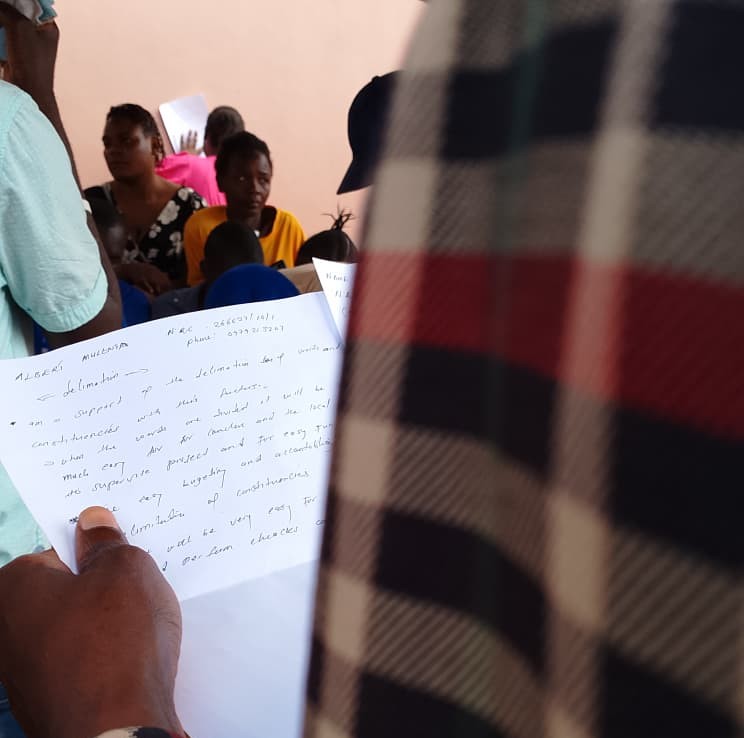
Some of the hired participants being briefed in preparation for their appearances before the technical committee to make submissions.
What should have been genuine civic participation instead exposed a process vulnerable to political mobilisation, poor communication and subtle manipulation, casting doubt on the legitimacy of a reform effort the government insists is citizen-led.
It remains unclear why Chipata became the focal point for this level of engineered support. No similar reports emerged from other districts. In Kasama, northern Zambia, for instance, a journalist who covered the hearings there described the process as smooth and largely free of interference.
A consultation already under strain
Early sessions in Chipata drew low turnout, with many residents, especially youths, unaware the consultations were happening. Attendance surged midweek when alleged ruling United Party for National Development (UPND) officials began ferrying groups to the venue for what appeared to be arranged submissions.
On 31 October, President Hakainde Hichilema encouraged citizens to support the review, arguing that more constituencies would enhance representation. His remarks coincided with a sudden wave of pro-delimitation submissions in Chipata. Inside Uncle Chipeta Lodge in Chipata, the venue of the submissions, some participants struggled even to pronounce “delimitation,” yet their support for it was strikingly uniform.
“The submissions for Wednesday and Thursday were almost identical,’’ said one of the participants. “People kept saying delimitation was good, but when asked to explain, they couldn’t. The second, third and fourth, all repeated the same points. It sounded rehearsed.”
She added that she observed participants queuing for K100 payments near a parked white Toyota Hilux.
By Thursday, mobilisation had grown more open and noticeable. Additional buses arrived, including one from Chipata Teachers Training College, carrying mostly civil servants – teachers, nurses, and support staff. Several passengers told MakanDay they only learned the purpose of the trip upon arrival.
These accounts now sit at the centre of growing concern that the hearings were rushed, poorly communicated, and vulnerable to manipulation.
Officials push back, observers disagree
In an interview with MakanDay, UPND deputy provincial chairperson Alex Phiri, named among those allegedly involved in mobilisation, denied any role in transporting participants.
“I was there almost all the days, but I never saw anyone being transported there,” he said.
But Alliance for Community Action (ACA) Executive Director Laura Miti, who observed the public sittings in Chipata, offered a sharply contrasting view. She said communities on the outskirts had little access to the process, some participants were reportedly instructed on what to submit, and others were mobilised simply to boost numbers.
“So overall, the sense is that its technical committee really was window-dressing, practically, was really difficult to get a good view of what Zambians really want,” she said.“In our view, as the ACA, it wasdesigned to ensure that Bill 7 as it was, would pass. So, it was more of a clean-up exercise.”
Inside the mobilisation machine
MakanDay established that mobilisation began well before the public sittings. Well-placed sources said local party structures coordinated with officials from Lusaka to arrange transport, meals and allowances for participants.
Eastern Province Deputy Permanent Secretary Lewis Mwape, who was seen at the meeting held at the provincial health office on Sunday 26 October, denied convening any gathering to canvass support. He confirmed meeting some civil society leaders, including Ms Miti, but insisted he did not attempt to influence anyone’s position.
“The meeting called by Dr. Lewis Mwape did not work out because NGOs (Non-Governmental Organisations) were being pressured to adopt a single position, to support the constitutional amendments, particularly on delimitation and representation,” said one source who attended the meeting.
Two days later, on October 28, a second meeting reportedly involving UPND-aligned CSOs was held at Jemita Lodge, allegedly attended by a State House official and a former UPND MP. The official referred all queries to State House when approached for comment.
The constitutional framework
The Constitution mandates the Electoral Commission of Zambia (ECZ) to delimit electoral boundaries at least every ten years, considering population, geography and social cohesion. The amendment process currently underway falls within this mandate.
Public sittings began on 27 October, with teams deployed nationwide in two phases, concluding in Lusaka from 10 to 13 November. President Hichilema had earlier sworn in a 25-member committee chaired by retired Supreme Court Judge Christopher Mushabati, tasked to propose amendments through what he called “an inclusive, consultative, cost-effective process that reflects the voices of all Zambians.”
This pledge followed public backlash against the 2025 version of Bill Seven, criticised for being rushed and opaque. Civil society pressure forced the creation of the new technical committee—welcomed as progress, but overshadowed by suspicion.
Civil society’s cautious support
Civil society and faith-based groups cautiously endorsed the review but insisted its legitimacy depended on transparency, open access to draft documents, and meaningful participation of women, youths and marginalised communities. They also warned that dissenting voices must be protected.
Governance experts say a transparent review could strengthen public trust and reshape Zambia’s governance culture. Yet the scenes in Chipata highlight how easily consultation can slide toward manipulation.
For the majority who were transported to make submissions, constitutional promises only matter when they translate into better lives. They spoke of wanting their children to have access to education, healthcare, clean water, and decent housing, not as policy ambitions, but as guaranteed rights in the constitution.
Zambia’s repeated struggles to produce a constitution that genuinely reflects citizens’ aspirations stem largely from a lack of national consensus, with recurring concerns over inclusivity, transparency and political will, according to experts.
In a 2012 interview, Professor Muna Ndulo, one of Zambia’s most respected legal scholars, warned that many African constitutions fail not because of poor wording, but because they are built on flawed, exclusionary processes.
Ndulo, who helped to draft the constitutions of South Africa, Zimbabwe, Kenya and Afghanistan, said the most successful constitutions were those in which there was a complete separation of powers between the three arms of government – legislative, executive and judicial.
“You can’t say the substance is going to be right when the process is wrong. It just doesn’t happen,” he said at the time. “You could get miracles, no doubt, but I think ordinarily those things don’t happen that way.”
The main image used in this story is AI-generated. It is included for illustration only and does not depict any actual scenes from Chipata.
As Zambians debate Bill Seven, questions grow over whether the “public input” behind it reflected genuine citizen voices, or carefully arranged support. Chipata’s public hearings reveal a troubling gap between the government’s promise of inclusive reform and the reality of a tightly managed process. By MakanDay and the team of five journalists in Eastern Province Latest News – MAKANDAY
As Zambians debate Bill Seven, questions grow over whether the “public input” behind it reflected genuine citizen voices, or carefully arranged support. Chipata’s public hearings reveal a troubling gap between the government’s promise of inclusive reform and the reality of a tightly managed process. By MakanDay and the team of five journalists in Eastern Province
Illegal tree cutting in the Chiawa Game Management Area (GMA) is robbing the community of its natural future. The destruction is driven by poverty, alleged involvement of traditional leaders, and a thriving timber route through Chirundu border.
A disappearing forest
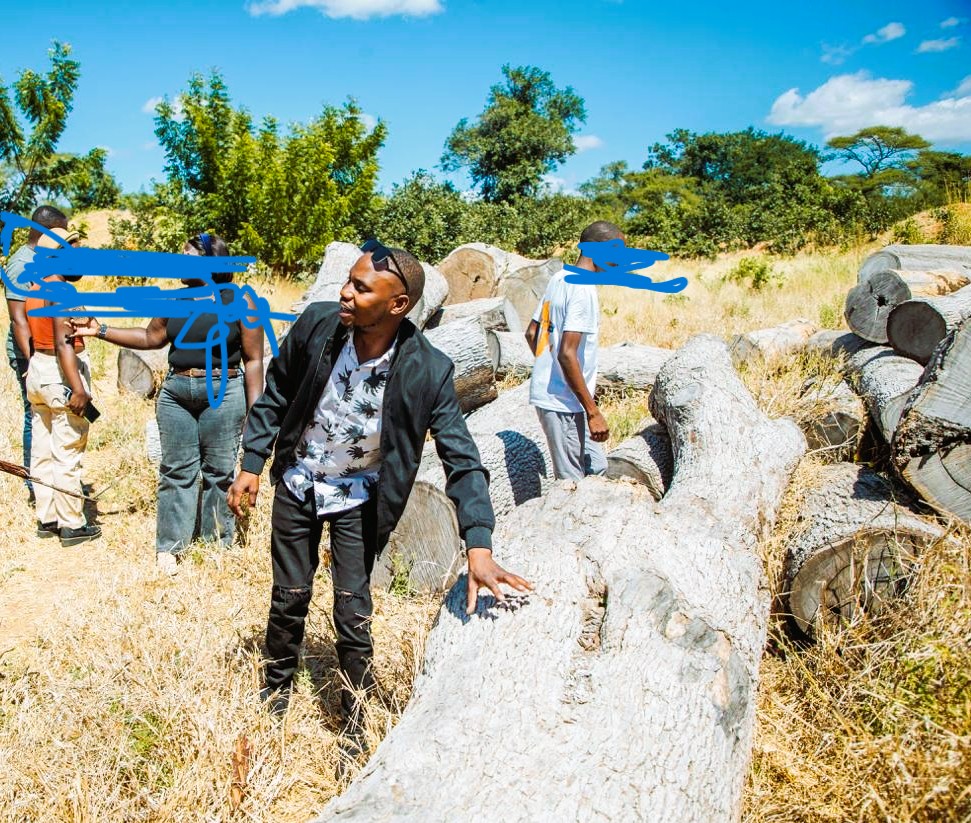
Chiawa GMA, about 150 kilometres southeast of the capital – Lusaka, is a key conservation buffer zone bordering the Lower Zambezi National Park. Its mopani and leadwood forests, vital wildlife corridors, are now marked by dusty tracks and fields of tree stumps. Between 2023 and 2024, illegal logging surged, with reports of powerful individuals exploiting vulnerable residents.
Eyewitnesses describe a coordinated, round-the-clock operation using heavy machinery. Investigations by Capital FM found that even some Community Resources Board (CRB) members tasked with protecting the forests were complicit.
CRB Executive Officer Chiwala Matesamwa said poverty and greed were fuelling the destruction.
“Community members were involved because they saw an opportunity to make money from the illegal activity,”he said. “The loggers used heavy equipment and would even camp in the area for days.”
He also accused some headmen and CRB members of participating, calling it a betrayal of their conservation mandate.
The human cost
At the bottom of the chain are the cutters—men and women working in dangerous conditions for minimal pay.
A 28-year-old logger described spending two weeks in the bush: “I saw at least 10 trucks loaded during that period.”
Another said he earned only K250 a day and quit after cutting 20 trees. Women earned even less.
Martha Kamalata, a mother of three, said: “For removing the bark from the trees, we were paid only K20, sometimes K30 per log.”
A 32-year-old man broke down explaining how his relative was arrested escorting a timber truck.
“I don’t want to speak to you. My relative was arrested,” he said sharply, later adding through tears that the family was still struggling to pay the fine.
The Department of Forestry has not responded to a 27 October 2025 press query on the outcomes of logging-related cases.
Allegations against the royal establishment
Multiple residents alleged involvement of the Chiawa royal establishment.
A 24-year-old man claimed palace officials were recruiting young people to cut mopani and leadwood.
51-year-old long-time resident, recalled hearing “machine-like cutting” late at night in 2024. He said villagers were told the palace was aware of the logging, though he later believed the chieftainess’ name was being used for private gain.
A senior headman confirmed palace representatives had asked him for permission to cut “a few trees,” only for the operation to expand massively.
“The only benefit I got was a bottle of cooking oil,”he said. “Those who came are the only ones who benefitted.”
He warned of the long-term impact.
“If we cut down the trees, where will we get shade? Protecting the trees is everyone’s responsibility,” he said.
Response from the royal establishment
Royal establishment Secretary Oliphans Madzwanya declined to comment, saying he required authorisation from Chairperson Boniface Chiawa.
Chiawa denied any involvement by himself or Madzwanya. He said the logging in places like Kambale was driven by “immigrant loggers” who negotiated with village headmen.
He said the establishment later imposed a logging and charcoal ban and dismissed two headmen who had allowed the activity. He dismissed the accusations as false, suggesting they came from “frustration” among those affected by the ban.
Chieftainess Chiawa was unavailable for comment as she was out of the country for medical treatment.
Chirundu Forestry Officer Olland Singogo
A betrayal of climate responsibility
Illegal logging has left Chiawa vulnerable to erosion, floods and declining agricultural productivity. Trees that once stored carbon and supported rainfall patterns are vanishing. Rivers and streams are drying up.
A senior resident who was interviewed fears the long-term consequences. “Back then, you couldn’t walk two metres without finding a mopani tree. Now, it’s hard to spot even one… That’s why rains are delaying because there are no trees,” he said.
“It’s unfortunate that this is happening at a time when we should be advocating for reforestation,” environmental activist Elliot Goledema added.
Headman Joseph Kajiwa said the community was already feeling climate change impacts.
“Illegal logging takes away from the community,”he said, adding that youths had been “used as cheap labour.”
He criticised weak enforcement. “The law clearly states that no logging should take place in a GMA, but there is no effective enforcement,” he said.
What authorities say
In May 2025, the author witnessed extensive timber destruction during an Environmental Crimes Journalism Fellowship tour led by Forestry Officer Olland Singogo. Six months later, Singogo was suspended and investigated for wrongful disposal of logs. He did not respond to calls.
A senior official at the Ministry of Green Economy and Environment said all logging in Chiawa appeared to be illegal. This was confirmed by Chief Forestry Officer Dr. Freddie Siangulube, who said no concession licence had been issued for the area as it is restricted.
Under Section 15(23)(a) of the Forests Act No. 4 of 2015, cutting or removing any forest product without a permit is illegal.
The Department of National Parks and Wildlife (DNPW) said the Forestry Department is the authority responsible for enforcing forest laws. Tourism Ministry Permanent Secretary Evans Muhanga added that forest-impact assessments fall under Forestry, although DNPW, which sits under his ministry, continues to monitor wildlife populations and land-use trends.
Enforcement actions and wider ccorruption
On 26 June 2025, the Zambia Revenue Authority (ZRA) and Zimbabwe Revenue Authority (ZIMRA) intercepted four timber trucks at Chirundu without proper export permits.
According to a statement on the ZRA website, the timber and vehicles were forfeited, avoiding a K188,000 loss in export duty. The trucks were valued at K3.6 million.
Illegal timber trade is part of a broader national problem. According to Transparency International Zambia, illegal logging of rosewood alone leads to staggering losses of about US$3.2 million in revenue and estimated bribes paid to state officials of about US$1.7 million.
Is there a solution?
Despite the devastation, small steps toward recovery are emerging. CRB Executive Officer Matesamwa said six trucks carrying illegal logs had been impounded.
Chitende Ward Councillor Paul Kagiye is pushing for alternative livelihoods to reduce reliance on environmental destruction.
Lucy is a fellow under the Wildlife Crime Prevention (WCP) environmental fellowship for journalists.
The MakanDay Centre for Investigative Journalism, in partnership with WCP, supported the reporting of this story.
By Lucy Nambela Illegal tree cutting in the Chiawa Game Management Area (GMA) is robbing the community of its natural future. The destruction is driven by poverty, alleged involvement of traditional leaders, and a thriving timber route through Chirundu border. A disappearing forest Chiawa GMA, about 150 kilometres southeast of the capital – Lusaka, is Latest News – MAKANDAY
By Lucy Nambela Illegal tree cutting in the Chiawa Game Management Area (GMA) is robbing the community of its natural future. The destruction is driven by poverty, alleged involvement of traditional leaders, and a thriving timber route through Chirundu border. A disappearing forest Chiawa GMA, about 150 kilometres southeast of the capital – Lusaka, is
The cross-border foot-and-mouth disease (FMD) outbreak, which began in mid-May 2025 and has spread across the Shiselweni and Lubombo regions, has cost eSwatini taxpayers an unbudgeted E38 million—almost five times the initial investment. This massive expense and the subsequent closure of the nation’s lucrative meat market could have been prevented. An Inhlase investigation found the crisis is rooted in the Ministry of Agriculture’s 2020 decision to divert E8.5 million allocated for fixing and maintaining vital border fences.
Dilapidated border fences are the primary entry point for the disease. Reporter visits by Inhlase found that cattle from KwaZulu-Natal, South Africa’s FMD epicentre, are mingling freely with eSwatini cattle in shared grazing areas. Deputy Director of Livestock Services, Luyanda Khumalo, confirmed the ministry did not use the E8.5 million allocated in the 2020/21 financial year under Project A400 (Cordon Fencing). He stated the funds were diverted to the COVID-19 emergency.
“When the COVID-19 lockdown was declared that year, the funds could not be utilised. The funds were re-allocated to address the emergency,” Khumalo disclosed. He further explained that subsequent reductions in project allocations meant the limited fencing materials procured only covered a short distance of the border.
For emaSwati, cattle are more than a source of wealth and sustenance; they confer status and are essential for traditional ceremonies like lobola (bride price). The FMD outbreak therefore threatens livelihoods across the country. Following the outbreak, the World Organisation for Animal Health (WOAH) and the European Union (EU) have imposed a meat trade ban on eSwatini, devastating the national meat industry.
Khumalo highlighted the severe financial impact, particularly the loss of the European Union (EU) market, where eSwatini beef enjoyed preferential tariff-free access under the Economic Partnership Agreement (EPA). In 2023, the country exported bovine meat worth an estimated E24 million to the EU and Southern African markets. According to the Department of Veterinary and Livestock Services Animal Production Report 2024, eSwatini exported 79,329.18kg of chilled beef and 284,276.06 kg of frozen beef to Norway, compared to 18,242 kg of chilled beef exported to Taiwan.
“FMD can disrupt the entire value chain,” Khumalo noted, explaining that movement restrictions, reduced animal productivity, and limited market access have impacted food security, driven up food prices, and caused job losses across the country.
Itshelejuba cattle grazing in Mahlababatsini
Fear of Losing Livelihoods
Feedlot Association secretary, Phiwayinkhosi Ginindza, echoed these fears, predicting the potential shutdown of the 296 affiliated feedlot enterprises. He lamented not only the loss of markets, but the movement restrictions imposed across the southern and eastern parts of the country. Ginindza added: “We can’t import from neighbouring countries due to the same outbreak, to manage the consistent supply of red meat. The industry will eventually see feedlot enterprises shut down due to these challenges.”
The government’s belated E38 million response to the crisis includes an expenditure of E8,556,128.18—almost exactly the amount diverted in 2020—to procure 188,800 doses of the FMD vaccine, the deputy director confirmed.
Broken Fences
Inhlase undertook a borderline tour to unravel the cause of the FMD outbreaks from the south of Shiselweni to the east of Lubombo. The starting point was the Mahlabatsini area in Shiselweni, which borders Itshelejuba Settlement in the Pongola area, KwaZulu-Natal. This reporter found that the border fence in the remote and excluded areas was in disrepair, cut and broken in certain parts of the borderline.
A Mahlabatsini resident, who preferred to remain anonymous out of fear of reprisal from cattle rustlers, took this reporter to a far-flung area where there was either a broken fence or no fence at all. He found Itshelejuba cattle grazing in Mahlababatsini. The SA cattle did not have the distinctive ear-tags and branded dip-tank numbers like those of eSwatini.
Deputy of Livestock Services Luyanda Khumalo
Down the Mtjolobela River valley lies the fenceless route for cattle rustlers, taking stolen cattle via Itshelejuba to auction sales in KwaZulu-Natal. Recently, SABC reported that Thami Ntuli, the Premier of KwaZulu-Natal, warned cattle rustlers and car thieves in Jozini, under the uMkhanyakude District Municipality, in a community meeting to stop smuggling eSwatini cattle into KwaZulu-Natal.
A Mkhwakhweni resident, who preferred anonymity, confirmed that the mingling of Mkhwakhweni and Pongola livestock in the grazing lands was a cause of FMD. He slammed the government for dragging its feet on fixing the border fence as a preventive measure against FMD, which is prevalent in the nearby Pongola in KwaZulu-Natal. Following the mid-May detection of the first animal with FMD at the Sikhwebezi Dip-Tank in the area, the Department of Veterinary and Livestock Services vaccinated 53,966 cattle across 10 dip-tanks in Shiselweni. However, only 44,722 cattle returned for the second dose, leaving 9,244 cattle unvaccinated.
Condemned to Poverty
The next stop was the Lavumisa area, which is not unfamiliar with wildlife incursions from Harloo Game Reserve across the border. Interviewed Nquthu resident Thokozani Mbhamali singled out stray wildlife as the source of FMD rather than cattle mingling in the grazing lands. He mentioned buffaloes, elands, warthogs and hyenas spotted wandering in the area. He described them as FMD carriers. He, however, sighed in relief that their cattle had been vaccinated following the FMD outbreak in the Mkhwakhweni area in mid-May.
“The warthogs burrow their way under the fence to get out of the game reserve. Our cries have fallen on deaf ears as the local authorities and the owner of the game reserve across the border have done nothing about it,” the Nquthu resident lamented.
Living in an FMD-restricted area, Mbhamali complained about the trade ban that has plunged the community into poverty. He bemoaned that it would not be lifted anytime soon, given the spread of the FMD outbreak to the other Lubombo areas. He further lamented that the community was facing an overlooked human-wildlife conflict.
Another resident, Masenteni Gina, echoed his concerns: “We rely on our livestock for a living, but we have a problem because our area was declared an FMD red zone. We’re unable to sell our cattle to the market. We don’t have money to buy food, pay medical bills, and cover our children’s school fees. We used to sell our cattle to generate income. Worse still, we can’t accept cattle as our daughters’ lobola. The FMD ban has condemned us to poverty.”
Broken fenceFallen fence
Skipped Dosage
In September, the FMD spread to the other Lubombo areas, including Lubuli, Mambane, Malindza, Mpaka, Matsetsa and Ka-Ndzangu. The privately-owned cattle farms of Richmond, Orbaland, and Nduma were not spared. Khumalo revealed that a total of 46,952 cattle from Lubuli, Mambane and surrounding areas had received the first dose of FMD vaccine, while only 44,505 had received the second dose. But he noted that the farmers did not bring back 2,347 cattle for the second vaccination. He added that the vaccination of 28,588 cattle at Mpaka and Matsetsa was ongoing at the time of publication.
The government’s containment efforts are hampered by farmers’ non-compliance. Khumalo revealed that out of the cattle receiving the first dose in Shiselweni and Lubombo, 11,511 were not returned for the second dose, creating a dangerous gap in immunity. Khumalo condemned the farmers’ failure to prioritize animal health and the livelihoods dependent on the meat industry, specifically criticizing those who do not kraal their cattle but only gather them for dipping days.
Khumalo urged communities along the border to stop vandalizing the fences. However, an unemployed young man in the Lavumisa area countered that the ministry fuels the vandalism: locally unemployed youth resent it when contracting companies bring in outside workers for the menial fencing jobs.
Repeat of History
In the north-east of eSwatini, residents of Lomahasha and Shewula are in a panic after a buffalo strayed into the area from the nearby game reserve in Mozambique in July. They feared history repeating itself after the government once culled 2,300 herds infected with FMD, following the arrival of two buffaloes from Mozambique in the 2000-2001 period. Reached for comment, Dr Xolani Dlamini, the now-retired Director of Veterinary and Livestock Services, told Inhlase that his department asked the Big Game Parks management to put it down and burn it after its FMD tests came out positive.
Interviewed Shewula cattle farmer Majuba Mabila expressed the community’s fear of the imminent FMD outbreak following the latest outbreak in the Ka-Ndzangu area in the Lubombo region. He pointed out that the eSwatini-Mozambique border fence was in a state of disrepair. He feared that their cattle, often smuggled into Mozambique, risked coming back infected with FMD, given that Mozambique is not among the FMD-free countries.
Despite getting Indvuna Bheji Masimula’s permission to tour the fence, this journalist, accompanied by Mabila and two female community development members, was blocked by the Umbutfu Eswatini Defence Force (UEDF) at the border patrol camp. The soldier-in-charge refused to allow us to proceed to the broken border fence. He turned back this journalist to seek permission from the army personnel operating the Maphiveni cordon line, about 20 km away.
Little did he know that Masimula and four community members had already painted a graphic picture of the eSwatini-Mozambique border fence in disrepair. They told Inhlase that they were unhappy that the ministry was repairing the fence in the Sitsatsaweni area, which is home to private cattle farms.
With a total of 11,911 cattle not given the second dose in the infected Shiselweni and Lubombo areas and illegal movement or smuggling of cattle from infected to non-infected areas, the eSwatini battle to stop the spread of cross-border FMD is far from over.
Inhlase
By Vuyisile Hlatshwayo The cross-border foot-and-mouth disease (FMD) outbreak, which began in mid-May 2025 and has spread across the Shiselweni and Lubombo regions, has cost eSwatini taxpayers an unbudgeted E38 million—almost five times the initial investment. This massive expense and the subsequent closure of the nation’s lucrative meat market could have been prevented. An Inhlase
Over E100 million of taxpayer’s monies meant for the development of the country’s strategic oil reserve cannot be accounted for. Between 2016 and 2025, over E100 million meant for the foundational design phase was spent with no works done.
The Strategic Oil Reserve facility at Phuzumoya in Siphofaneni is an initiative meant to be the nation’s bulwark against fuel scarcity and price volatility, guaranteeing a crucial 60-day supply. The project’s groundbreaking ceremony was presided over by His Majesty King Mswati III on the 23rd of April 2025. The Taiwanese Minister of Foreign Affairs, Lin Chia-lung, was also in attendance.
An Inhlase investigation reveals a catalogue of financial mismanagement and procurement malpractices that saw over E100 millions of taxpayers’ money squandered on failed designs and ill-conceived contracts long before the recent E5.2 billion agreement for its construction was signed.
Audits reports show that in 2016, the Ministry of Natural Resources and Energy (MNRE) paid multiple companies E93 325 261.61 for foundational and design work.
Taiwan Foreign Affairs Minister Lin Chia-Lung with King Mswati IIIThe 3-D model of the E5.2 billion fuel and oil reserve facility which is under construction.
Phase 1: Initial Infrastructure and Designs (2016–2019)
The MNRE’s first major expenditure related to the project involved four different companies between 2016 and 2021, totalling E57 726 656.66.
The recipients included:
Inyatsi Construction (Pty) Ltd: Received E47 444 273.28 for road construction activities between 2017 and 2019.
Eswatini National Petroleum Company (ENPC): Received E10 000 000 in 2021.
Eswatini Electricity Company (EEC): Received E188 077.02 for electricity services in 2016.
Mpendza Construction (Pty) Ltd: Received E94 306.36 for other professional services in 2017 and 2018.
This initial outlay suggests significant preparatory work, but the most egregious spending was yet to come on the actual technical designs. In short, the companies were paid without full delivering the work while others were paid without having their work available since their work depended on the completion of the designs. Basically, the controlling officer at the time in the MNRE as well as the then project lead and the Ministry of Finance paid for services that were not fully or not rendered at all.
Phase 2: The CTCI Corporation Contract (2018–2021)
On October 25, 2018, the MNRE engaged the Taiwanese firm, CTCI Corporation, for Basic Design Engineering Services and Engineering, Procurement, and Construction (EPC), at cost estimate. The contract, signed in February 2019, aimed for basic project designs and detailed estimated costs for the four 10 000 cubic metres oil tanks.
Despite the scope being limited to basic designs, the MNRE paid CTCI Corporation E35 598 604.95 over three years (2019 to 2021). This payment was for initial deliverables like the plot plan and process flow diagram.
The ENPC Era: From ‘Optimisation’ to Irregular Expenditure (2021–2024)
In 2020, the project was transferred to the newly established ENPC under the Petroleum Act, No. 16 of 2020. Despite inheriting a project that had already consumed over E93 million, the ENPC Board resolved in December 2020 to re-cost the designs and procure a new contractor for “Design Optimisation and Bills of Quantities Consultancy Services.”
This decision essentially rendered the E35.6 million paid to CTCI Corporation for the original designs worthless. The ENPC’s subsequent actions only compounded the financial disaster. Further, it showed that there was no proper handover of the project from the ministry to ENPC resulting to a lot of fruitless expenditure.
The Minister of Natural Resources and Energy Prince Lonkhokhela with senior ENPC Board chairperson being shown the designs.Senator Siphelele Mkhonta, Deputy Speaker Madala Mhlanga with the minister being taken through the project by engineers.
The Billion Brother/Fhatani JV Fiasco (2022–2023)
The tender for design optimisation was awarded to a purported Joint Venture (JV) between Billion Brother Project Management Consultancy (Pty) Ltd and Fhatani Consulting Engineers. The auditrevealed the JV was non-existing as there were no signed documents, lacking formal registration—a fundamental breach of due diligence that deprived other bidders of an opportunity. By standards, there should be an agreement of the JV and formal registration locally to be deemed lawful.
Original Contract and Unauthorised Scope Change:
The original contract, dated May 9, 2022, was for E9 995 574.22. However, the scope of work was changed to essentially reproduce the designs from scratch, despite the MNRE having already paid E35.6 million for them.
Inhlase can reveal that there was an unjustified cost escalation in this contract. An Addendum dated August 31, 2022, increased the contract price by nearly 90% (E8 995 469.70), hiking the total contract value to E18 991 043.92. Documents seen by Inhlase reveal that the Eswatini Public Procurement Regulatory Agency (ESPPRRA) warned against this, advising an independent evaluation due to the high value, but ENPC ignored the advice and appealed the position. Furthermore, the former CEO is said to have failed to seek the minister’s approval for this significant change and cost escalation, violating Section 51 of the Public Finance Management Act which reads “Public officers with financial responsibility must seek the Minister’s approval for any cost escalations, deviations, or changes in project scope that might contravene the law.”
This was deemed a fictitious contract and fraudulent payments. The contract was deemed “fictitious” by the auditors, lacking key protective clauses like penalties for non-performance or delays. Despite the contract being terminated on October 10, 2023, due to “unsatisfactory and/or incomplete” work, ENPC had already paid the JV E16 082 204.05 which was a colossal figure representing fruitless and wasteful expenditure for services not rendered. The auditors further noted irregular payments, including E1 080 834.64 paid to Billion Brother for “Deloitte – Financial Model” and “Deloitte – Feasibility Study,” suggesting the JV may have been a “conduit pipe” for funnelling funds to Deloitte and Touche South Africa without a direct agreement.
“Regulation 113 (5) of the Public Procurement Regulations of 2020 clearly stipulates that, for a Contract Amendment to be valid, it must be duly signed by the authorized representatives of both the procuring Entity and the Supplier.”
The ESPPRA is a body in the country, established according to under the Procurement Act of 2011 has the power to regulate procurement in Public Enterprises and Local Governments. The board also has powers to investigate suppliers and blacklist them. When the ESPPRA Chief Executive Officer Vusi Matsebula explained that they were not made aware if the ENPC declined any advice from the entities.
“As to whether they have disregarded our advice we have not been made aware of that,” he said.
Understanding that there is a recently completed forensic audit of ENPC, Matsebula said the ENPC would need to communicate to them on issues of procurement that would require the ESPPRA’s intervention.
The Deloitte, EPCM/SOLIDCARE, and Buna Group Irregularities (2023)
The financial misconduct escalated as ENPC engaged three separate entities for overlapping or redundant services, repeatedly flouting tender procedures. Documents that the publication saw, from the ESPPRA indicate that in a number of instances the regulatory board warned about the floated procedures.
ENPC awarded Deloitte & Touche South Africa Tender No.7 of 2023/2024 for the provision of consultancy services for finance raising, development and technical advisory services for the construction of the strategic bulk fuel storage. Deloitte and Touche came with other companies, EPCM JV, a consortium between Solid Care Services (Pty) Limited and EPCM Bonisana (Pty) Technical Consultants. However, they failed to deliver the awarded and agreed-upon. Despite the failure, ENPC paid Deloitte retainer fees amounting to E5 172 400 which is deemed as another instance of fruitless and wasteful expenditure.
EPCM/SOLIDCARE JV: Engaged on September 1, 2023, for technical advisory services without adhering to procurement processes.
The initial contract price was E16 700 000, but the technical advisory component in the tender proposal was only E11 250 000, meaning there was an unjustified increase of E5 450 000 in the final contract.
Payments to this JV totalled an astonishing E31 167 197.10. Crucially, E29 500 530.43 of this total was deemed irregular expenditure, as it was incurred for services not covered in the original scope, but unlawfully introduced through Addendums instead of new Requests for Proposals (RFPs).
Buna Developers (Pty) Ltd: Engaged on December 17, 2023, for development advisory services, again without adhering to procurement processes. This was for the same scope of services already awarded to Deloitte and Touche.
The original contract of E7 393 500 was later increased by E2 406 500 to E9 800 000 via an Addendum, again lacking justification for the price hike. Total expenditure on advisory services to the Buna Group was E12 006 451.25.
The newly appointed ENPC Board Chairperson Dr Velaphi Dlamini was engaged to clarify the steps that have been taken by the board.
“We are in possession of information indicating that the Auditor General’s report has flagged the flouting of procurement procedures involving Billion Brothers, Deloitte & Touche, and Buna Developers.
Asked about the remedial action, he said: “Kindly note that we confirm that as the Board we have received a report as you have stated. Please note we are in the process of consulting and engaging with all relevant stakeholders in respect of the findings in the report.”
The Grand Total: Over E140 million down the drain
The investigation paints a grim picture of a national project mired in incompetence and corruption, where poor planning and reckless financial practices cost the public an immense sum before the current construction phase.
The total funds paid out to these companies for designs, optimisation, and advisory services that were either rejected, incomplete, or fraudulently inflated, amounts to a stunning E157 753 114.01 excluding the recent E5.2 billion contract with Overseas Electric and Engineering Corporation.
The investigation revealed that the project suffered from insufficient oversight and technical expertise which failed to ensure that the processes delivered tangible results commensurate with the funds expended.
Based on the funds that were commissioned at the MNRE prior to the formation of ENPC, it shows a lack planning and accountability. A visit to the site among the paid for services which is over E47 million for a road to the site, when the project was at the MNRE, showed that there had been a gravel road to the site. Additionally, a lack of oversight from Parliament can be pinpointed in this regard as funds had been allocated to the ministry for the project on a yearly basis without scrutinising the amount of work covered by previous budgets.
Despite all the funds that have been channelled by ENPC Board and former CEO, in September 2023, ENPC entered into a Memorandum of Understanding (MOU) with the Overseas Investment and Development Corporation (OIDC), the parent company of Overseas Electric and Engineering Corporation (OEE). By April 2025, a contract was signed with OEE for the bulk of the construction works, valued at USD290 000 000 (plus a USD3 000 000 provisional sum), an amount equivalent to approximately E5.2 billion at current exchange rates.
The audit noted the tragic irony: the initial investment on drawings, followed by the substantial payment for the “optimisation” process that produced no tangible deliverables, meant a fresh contract was required to commence the project, essentially paying for the same item designs all over again.
The dream of a 60-day strategic fuel reserve, a necessity underscored by the 2021 civil unrest and subsequent supply challenges remains alive. But Eswatini’s energy security comes at a devastating cost, not just the E5.2 billion construction price, but the E157 million already lost to poor governance, procurement breaches, and sheer waste. The public demands accountability for the millions that simply vanished.
In June 2025, Eswatini’s Parliament passed a Finance Bill that granted the Minister of Finance and ENPC permission to engage OEE, which is the Taiwanese company that will do the job at E5.2 billion. The passing of the Bill came against a backdrop of a controversy regarding the existence of another Botswana-based company which had presented to conduct the same job for E2.8 billion. Surprisingly, since the news about the engagement of the Taiwanese company started making rounds, early 2024, Members of Parliament (MPs) vowed that the E5.2 billion contract would not see the light of the day in Parliament.
During a workshop of the House of Assembly and Senate Portfolio Committees at Pigg’s Peak Hotel around November 2024, the former CEO told Parliamentarians that there was a company that brought almost similar or better designs for the project for E2.8 billion. Last December, the government through the MNRE sent a delegation to finalise the deal in Taiwan, which was led by Minister Sikhumbuzo Dlamini, the incumbent Minister of Tinkhundla Administration and Development, who represented the MNRE Minister Prince Lonkhokhela.
In April 2025, the Minister of Finance, Neal Rijkenberg, tabled the Strategic Oil Reserve Loan Bill with a certificate of urgency. In May 2025 during a workshop of the loan Bill, the House of Assembly Finance and MNRE portfolio committees, started singing a new tune showing their full support to the Bill and the E5.2 billion facility. Notably, the workshop occurred weeks after the Republic of China on Taiwan Minister of Foreign Affairs Dr. Lin Chia-lung visited the country where an unavailing of the oil reserve 3-D architectural model was made before His Majesty King Mswati III at Mandvulo Grand Hall. On May 29, 2025, the House of Assembly passed the Bill.
Just a month ago, the MNRE Minister took the chairpersons of both Houses of Parliament to tour the construction site. He expressed gratitude at seeing the progress of the project and explained that it is expected to be completed within 36 months.
In terms of the unjustified expenditures, the minister explained that the office of the Auditor General has been engaged but could not comment on whether the audit has been implemented or would be implemented. The minister assumed his position in 2023. In 2024, he dissolved the ENPC Board before the end of its term, which was appointed in 2021. Further, the then CEO’s contract was not renewed.
A breakdown of some of the funds
Period
Service Provider
Service Description
Amount (E)
Status
MNRE ERA (2016-2021)
CTCI Corporation
Basic Design Services
E35,598,604.95
Fruitless & Wasteful
MNRE ERA (2016-2021)
Inyatsi, EEC, Mpendza, ENPC
Initial Infrastructure & Funds
E57,726,656.66
Wasteful Expenditure
ENPC ERA (2022-2023)
Billion Brother/Fhatani JV
Design Optimisation
E16 082 204.05
Fruitless & Wasteful
ENPC ERA (2023)
Deloitte & Touche
Finance Raising Advisory
E5 172 400
Fruitless & Wasteful
ENPC ERA (2023)
EPCM/SOLIDCARE JV
Technical Advisory (Irregular)
E31 167 197.10
Irregular Expenditure
ENPC ERA (2023)
Buna Group
Development Advisory
E12 006 451.25
Unjustified Expenditure
SUB-TOTAL
E157 753 114.01
Inhlase
BY INHLASE REPORTER Over E100 million of taxpayer’s monies meant for the development of the country’s strategic oil reserve cannot be accounted for. Between 2016 and 2025, over E100 million meant for the foundational design phase was spent with no works done. The Strategic Oil Reserve facility at Phuzumoya in Siphofaneni is an initiative meant
Zambia’s young gymnasts continue to make remarkable strides, with fresh talent emerging from the Bliss Gymnastics and Arts Zambia Academy following an energetic inter-district competition between Lusaka and Ndola. The event highlighted the sport’s rapid growth and the nation’s rising prospects on the international scene.
Coach Siphongile Kasaro expressed gratitude to parents for their support and noted the academy’s impressive progress since its establishment.
“Gymnastics is growing extremely well, and we are impressed with the performances,” Kasaro told MakanDay.
The Lusaka–Ndola competition marked a major step for the sport locally, giving athletes a platform to showcase their skills. Kasaro hopes that more districts will now join in, especially ahead of Zambia hosting an international gymnastics competition in July 2026.
“We will ensure other districts across the country take part in the regional event,” she said, emphasising the need for more qualified coaches. The academy plans to expand into Eastern and Northwestern Provinces, where it hopes to train local coaches and strengthen the sport nationwide.
Zambia’s young gymnasts have already proved their potential, winning gold and silver medals at the African Youth Development Championship in Harare, Zimbabwe, a breakthrough that has pushed Zambia firmly onto the global gymnastics map.
Kasaro appealed for sponsorship to ensure that talented girls from low-income households are not left behind.
“We offer sponsorship to those who cannot afford, because we want their talent to shine,” she said.
Among the young stars is nine-year-old Diana Daka, who claimed her first medal at the competition. Beaming with pride, she said she is determined to work harder ahead of the next regional event. Her mother, Diana Kasaro, praised the academy’s support and encouraged other parents to enrol their daughters.
The upcoming regional competition in Zambia is expected to draw teams from Zimbabwe, Cameroon, Namibia, and Mozambique, setting the stage for one of the country’s most exciting gymnastics events yet.
Zambia’s National Gymnastics Team Heads to the Region Five Games
Zambia’s national gymnastics team will compete at the Region 5 Games in Windhoek, Namibia, on 11 December 2025. The team features exceptionally talented young athletes:
Level Seven
Chimwemwe Namwila (12)
Zion Britton (12)
Anisha Katanga (14)
Level Five
H’leziphe Mbale (11)
Lushomo Mwango (12)
Bella Mudenda (10)
Paris Malawo (10)
Brenda is an intern at MakanDay under the Free Press Initiative’s Journalism Graduate Internship Programme, which aims to promote excellence in journalism.
By Brenda Muzeya Zambia’s young gymnasts continue to make remarkable strides, with fresh talent emerging from the Bliss Gymnastics and Arts Zambia Academy following an energetic inter-district competition between Lusaka and Ndola. The event highlighted the sport’s rapid growth and the nation’s rising prospects on the international scene. Coach Siphongile Kasaro expressed gratitude to parents Latest News – MAKANDAY
By Brenda Muzeya Zambia’s young gymnasts continue to make remarkable strides, with fresh talent emerging from the Bliss Gymnastics and Arts Zambia Academy following an energetic inter-district competition between Lusaka and Ndola. The event highlighted the sport’s rapid growth and the nation’s rising prospects on the international scene. Coach Siphongile Kasaro expressed gratitude to parents
Steven is senior counsel specialising in constitutional and administrative law, where he has championed media organisations’ rights to information and other public interest causes.
Beyond the courtroom, his Twitter bio says: “Keen on law, obsessed with (good) cricket.” He is the lead independent director of Cricket South Africa and has helped guide the organisation from crisis to recovery.
Steven’s passion for cricket began early — at age 11 he became South Africa’s youngest qualified umpire. That sense of fairness likely influenced his legal career.
Over two decades in law, he has clerked for Chief Justice Arthur Chaskalson and co-founded the Pan African Bar Association of South Africa, working to transform the legal profession in the country.
Mantoe Phakathi
Non-executive Director
Since: December 2019
Mantoe is an experienced communications specialist, freelance journalist, and media trainer. She has over 15 years of journalism experience, focusing on development stories. Her bylines include The Nation Magazine, IPS News, Mail & Guardian, Independent Newspapers, and Climate Home.
As a communications specialist, she has consulted for organisations such as the UN Food and Agriculture Organisation, National Agriculture Marketing Board, Marchmont Communications, and Inhlonhla.
She has also worked with the Food, Agriculture and Natural Resources Policy Analysis Network, Swaziland Network Campaign for Education for All, and the government of eSwatini’s National Climate Change Unit.
Mantoe is a part-time lecturer in journalism and mass communication at the University of eSwatini. She holds an MSc in Climate Change, Development and Policy (University of Sussex), a PG Diploma in Media Management (Rhodes University), and a BA in Communication Science (University of South Africa).
Troye Lund
Executive Director and Managing Partner: Editorial
Since: March 2022
Troye started reporting on South Africa’s political economy during the country’s first democratic elections in 1994. Her career began on The Star newspaper’s political desk, where she had a ringside seat to observe and report on the establishment of a new democratic state – including the Truth and Reconciliation Commission hearings and the drafting of South Africa’s constitution.
She joined Independent Newspapers’ parliamentary team in Cape Town three years later, tracking and interrogating policy, budgets, legislation, and the party politics behind them.
After a stint as a parliamentary correspondent for radio, she became deputy editor of Fairlady magazine in 2002, gaining editorial and management experience – planning content, commissioning, editing, and managing production.
Troye returned to Parliament in 2005 for Finweek, and later joined Times Media to write for Financial Mail and Business Day. She was appointed IJ Hub’s Managing Partner: Editorial in 2022.
Lionel Faull
Non-executive Director
Since: 6 December 2023
Lionel is a diligent and determined researcher, communicator and trainer with more than a decade’s experience investigating the energy, resources and public sectors.He brings a detail-oriented approach to problem-solving, an ability to synthesise large volumes of complex material, and the skill to communicate with clarity and precision.Lionel enjoys applying his forensic ‘follow the money’ skills to investigations, working closely with like-minded people in a collaborative environment and delivering impactful storytelling that serves the public interest.
Prof Dumisani Moyo
Non-executive Chair
Since: December 2019
Dumi is the executive dean in the faculty of humanities at North West University. He moved to his current role after a stint as associate professor and vice dean (academic) in the faculty of humanities at the University of Johannesburg.
Earlier, he worked as regional programme manager for media and access to information at the Open Society Initiative for Southern Africa, where he led the foundation’s efforts to promote media freedom, media diversity, access to information and ICTs for development.
His previous professional experience includes senior lecturer and head of department (Wits University); visiting lecturer (University of Addis Ababa); research fellow (University of Oslo); Fulbright Scholar (College of Lake County and William Rainey Harper College, Illinois); and lecturer (University of Zimbabwe).Dumisani has served as an independent consultant for several NGOs, donor organisations and multilateral organisations on a wide range of assignments, including project evaluations, strategic planning/review and research projects focusing mainly on media and democracy and media and development in Southern Africa.His research interests include media policy and regulation in Africa; and (new and alternative) media and political engagement in Africa; journalism in the digital era; and media and elections
Oxpeckers is a non-profit company with a proven track record in managing multinational, cros -border journalistic collaborations. Its aims include building capacity for and improving the impact of African environmental journalism, inter alia by providing a home for investigative journalists interested in environmental issues
Inhlase (“spark” in siSwati) registered as a non-profit in 2017. In Africa’s last absolute monarchy, a country where few dare take on the powers that be, it has been hard at work uncovering corruption and making it public. It aims to ignite positive change in the country.
MakanDay was established in 2016. It is geared towards investigative journalism that serves the interests of the public. From small beginnings, it has made a name for itself with its combination of grassroots investigations and strong analysis.
Founded in 2016, MNN is strongly living up to its vision to be the leading investigative journalism organisation in the Mountain Kingdom, promoting accountability and transparency; exposing corruption and wrongdoing and promoting an open and democratic society.
Founded in 2020, the Platform is the youngest IJ Hub member centre. It has quickly established itself as Malawi’s pre-eminent investigative outfit, walking away with the Overall Winner, Investigative Story of the Year, and Electronic Media House of the Year prizes at the 2022 Misa Malawi awards
AmaBhungane (isiZulu for “the dung beetles”) launched as an independent, non-profit newsroom in 2010 with the aim of developing investigative journalism to promote free, capable media and open, accountable, just democracy.
Its hard-hitting exposés, including the #GuptaLeaks which helped bring down the South African president, have earned it international acclaim.