i6204

i6204

Sewer Crisis in Mtendere Gives Residents No Peace Editor on November 26, 2025 at 7:22 am

By Gibson Zulu

Although those close to the US$355 million Millennium Challenge Corporation–funded project maintain that it was fully implemented and passed fit, the reality on the ground tells a different story. Persistent sewer blockages and recurring spills have left Mtendere residents trapped in a cycle of neglect — one that continues to threaten both their health and their dignity.

The crisis on the ground

On the fringes of Lusaka’s densely populated Mtendere East township, in Kalikiliki Ward 35, residents and traders cautiously pick their way through pools of murky water leaking from broken sewer lines. Raw effluent has for years seeped across the narrow footpaths that snake between homes and market stalls, forcing families to live and trade in the shadow of a persistent health hazard.
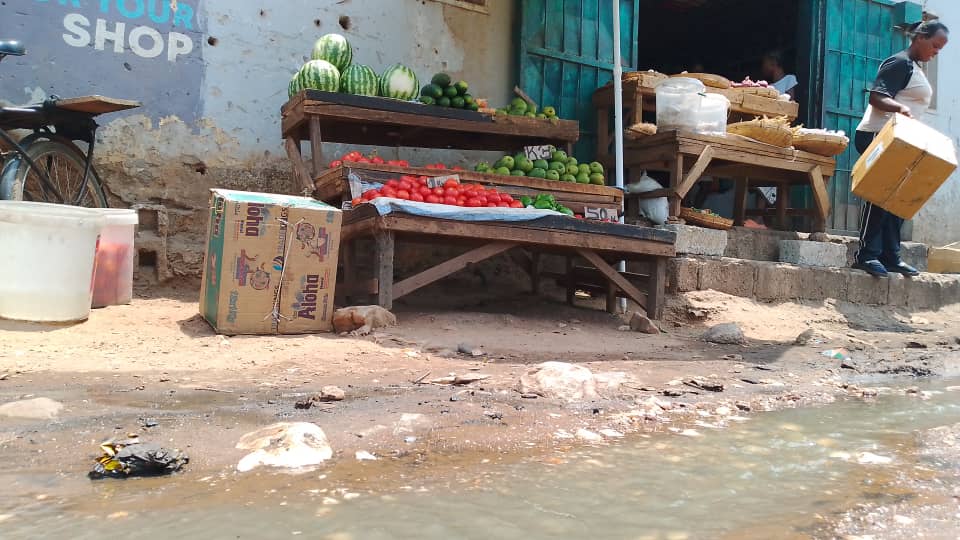
“The stench hangs heavy in the air, we have lived like this for too long,” lamented resident Chisala Laaske, his voice weary but firm. “The situation worsens when the rains come. The sewer overflows into our houses, children fall sick, and no one seems to care, not even the government.”

Mtendere East, located on the eastern edge of Lusaka, is a peri-urban community grappling with chronic water shortages, poor housing infrastructure and a collapsing sewerage system.

Ironically, Mtendere means “peace” in the local Cinyanja language — yet for those living amid sewage and repeated flooding, peace remains elusive.

What was promised

To address deep-rooted water and sanitation challenges, the Zambian Government partnered with the United States through the Millennium Challenge Corporation (MCC). The resulting Lusaka Water Supply, Sanitation and Drainage (LWSSD) Project was expected to transform communities like Mtendere.

The “Water Supply and Sanitation Project,” known as Contract Package 3 (CP3), covered works in both Mtendere West and Mtendere East. It was part of the US$355 million Millennium Challenge Compact signed in 2012.

To implement the compact, the Government established Millennium Challenge Account–Zambia (MCA-Zambia). After the compact expired in November 2018, a transition entity, Millennium Project Completion Agency–Zambia (MPCA-Zambia), was created to finalise remaining works.

The Mtendere component was only completed in 2023, and the post-compact programme officially closed in 2024.

What was built

According to MCA-II, which shared clarifications based on institutional memory from the first compact:

  • The Mtendere sub-project was valued at US$40 million.
  • Elevolution Engenharia, a Portuguese firm, was contracted in 2016 but terminated in 2018.
  • UNIK Construction was engaged to complete the works.

Infrastructure upgrades included:

  • 88 km of water supply pipelines
  • 82 km of sewer network (Mtendere East alone received 42.6 km)
  • 1,075 manholes constructed across the area
  • Section 11: A 1.5 km sewer interceptor line with 25 manholes routing sewage to the Salama Pump Station.

Under the compact framework, all completed assets were eventually handed over to the Lusaka Water Supply and Sanitation Company (LWSC) for operation and maintenance.

The reality residents still face

Despite the infrastructure investments, Mtendere continues to experience recurring sewer blockages, overflows and contamination nearly a decade later.

A MakanDay check found persistent water and sewerage challenges along J. Muko Roadand NRDC Road.

Kalikiliki Ward Councilor Shadreck Chimwanga said the problem has been ongoing for more than four years.

“We have had enough of this problem, engineers at Lusaka Water, must take proactive measures to find a lasting solution,” he said.

Why the system is failing

Lusaka Water attributes the recurring failures to a combination of structural and behavioural challenges — including illegal structures built directly over sewer lines, blocked access to manholes, vandalised or missing manhole covers, and sewer lines laid under road centrelines, which makes them highly vulnerable during roadworks.

“Given that many manholes sit on the road centreline, the likelihood of manholes being ripped, exposed, or damaged is extremely high, even under well-planned and properly supervised road maintenance operations,” said Pamela Kasese Bwalya, Chief Executive Officer (CEO) of Millennium Challenge Account–Zambia II. “These disturbances often result in debris entering the sewer network, leading to blockages and choking of the system.’’

Behavioural factors also play a major role. These include residents dumping solid waste into toilets, using inactive sewer connections to flush stormwater into the system, and domestic waste entering manholes due to vandalism.

Bwalya, who also served as CEO of the completion agency and oversaw the finalisation of works after the MCC Compact closed in 2018, clarified that there are no ongoing or planned remedial works supported by MCC or MCA-Zambia. The Compact programme concluded with a full handover of all assets to Lusaka Water and Sewerage Company (LWSC), which is now responsible for operation and maintenance.

She clarified that there are no ongoing or planned remedial works supported by MCC or MCA-Zambia, since all assets were handed over to LWSC at compact closure. However, LWSC has introduced several measures:

  • Routine sewer maintenance and jetting
  • Rapid response teams addressing spillages within 24 hours
  • Community sensitisation campaigns with Lusaka City Council
  • Manhole security improvements
  • Targeted rehabilitation of high-risk sewer lines
  • Coordination with LCC contractors to minimise damage during roadworks.

Lusaka Water Public Relations Officer Ruth Mulenga added that illegal construction of houses and shops over sewer lines has worsened blockages and severely limited access for repair teams.

Fear as the rains approach

With the rainy season approaching, residents brace for worsening conditions.

“For us, the rains don’t bring relief, they bring fear,” said resident Angela Mande. “People must learn to use toilets properly, yes. But authorities also need to fix this once and for all.”

For now, the community remains caught between failing infrastructure, poor planning, and institutional gaps — with no peace in sight.

Gibson is an intern at MakanDay under the Free Press Initiative’s Journalism Graduate Internship Programme, which aims to promote excellence in journalism.

By Gibson Zulu Although those close to the US$355 million Millennium Challenge Corporation–funded project maintain that it was fully implemented and passed fit, the reality on the ground tells a different story. Persistent sewer blockages and recurring spills have left Mtendere residents trapped in a cycle of neglect — one that continues to threaten both Latest News – MAKANDAY 

By Gibson Zulu Although those close to the US$355 million Millennium Challenge Corporation–funded project maintain that it was fully implemented and passed fit, the reality on the ground tells a different story. Persistent sewer blockages and recurring spills have left Mtendere residents trapped in a cycle of neglect — one that continues to threaten both

Lives in Limbo: A tale of the crisis facing eSwatini’s ostomates Inhlase on November 25, 2025 at 7:09 am

By Nokukhanya Musi 

When 46-year-old road accident survivor Mkhulisi Masina* wheels himself across the small bedroom he now rarely leaves, his greatest fear is not pain or paralysis—it is the soundless leak that signals his colostomy bag has failed again.

The stoma on his abdomen, an artificial opening created after he broke his spine along the Manzini–Mbabane highway, has become a daily battle for dignity. 

“I deal with leakage that can cause unpleasant odours, and it sometimes damages my skin,” he says. 

Masina is one of hundreds of people in eSwatini living with ostomies—medical conditions that require a colostomy, urostomy or ileostomy pouch to collect body waste. But in a health system buckling under chronic medical shortages, the simple plastic-and-adhesive pouch that keeps these patients alive has become a rare commodity. 

After being discharged from a private hospital where supplies were always available, Masina now relies on public hospitals that frequently run out. His family carer travels monthly to Mbabane Government Hospital to fetch his pouches—and increasingly returns empty-handed.

Interviews and field reporting by Inhlase reveal that eSwatini’s ostomates face a silent but devastating crisis: a nationwide shortage of colostomy, ileostomy and urostomy bags that forces patients to reuse worn-out pouches, improvise with plastic bread bags, or go without altogether. 

Masina’s case is not an exception. Recently, another ostomate made headlines when she posted on social media pictures of how she has resorted to using bread plastic bags as his colostomy bags. She glued and taped the bread plastic bags to the abdomen due to the shortage of proper colostomy supplies in the public health facilities. However, this was met with deafening silence from civil society and government, aggravated by the conspicuous mainstream media’s inattention to the ostomate’s predicament. 

A 28-year-old Thulile Shongwe from the Mbikwakhe area in Matsapha underwent an ostomy surgery at the Mbabane Government Hospital. She cannot afford the colostomy pouches, as a pack of 10 costs around E1,200. After complications from cervical cancer treatment, Shongwe has gone public appealing for assistance in purchasing the necessary but costly colostomy bags.

The consequences are severe—skin infections, odour leakage, social isolation, and a collapse in mental well-being. Yet despite the public outcry generated when another ostomate posted photos of using improvised plastic bags taped to her abdomen, the government has offered no clear response, and the mainstream health system remains unable to guarantee the most basic supplies for some of the country’s most vulnerable patients.

“The frustration can be overwhelming, especially since colostomy supplies are expensive and often out of stock. It feels like the government does not care, which leads to feelings of depression. It’s painful when the supplies don’t work effectively; it can lower your self-esteem. It’s hard to be yourself when you’re constantly worried about how you smell,” Masina laments.

Reached for comment, Swaziland Democratic Nurses Union (SWADNU) secretary general, Mayibongwe Masangane, points out that the shortage of colostomy bags has been going on for a long time in the country. He says the absence of colostomy bags makes it difficult to keep the patient clean and the patient’s surroundings. He blames the ongoing shortage of colostomy supplies on the poor procurement system.  

“Some patients may buy the bags from private healthcare facilities. Due to the limited resources, they keep them beyond the desired period compromising prognosis by the breeding infections. Fixing the procurement problem may save the situation,” he says.

In an attempt to understand the supply-side challenges with the supply of the critical colostomy bags, this reporter interviewed ASD Medical General Manager Trevor Mdziniso who noted his company had established relationships with multiple manufacturers to alleviate the problem. 

“We have made arrangements to establish business relationships with more than one source of colostomy bags. This diversification strategy is vital, especially given the challenges faced in the public healthcare sector, where supply shortages can disrupt patient care,” he says.

In response to key concerns in the healthcare sector about affordability, Mdziniso notes that ASD Medical employs a systematic pricing algorithm to keep costs manageable. “Our pricing is determined solely by the cost of bringing goods from our suppliers,” he says. 

However, Mdziniso acknowledges the competitive landscape. “We don’t deal directly with patients; we work with organisations like pharmacies, clinics, and NGOs. Public health facilities often offer subsidised products, making them more affordable compared to private options.” 

ADL Medical recognizes that many ostomates lack knowledge on proper use. 

To address this, they provide patient information leaflets with their products, ensuring healthcare workers educate patients effectively. 

Inhlase contacted the Ministry of Health multiple times to gather information on the current state of support for ostomates. However, Communications Officer Nsindiso Tsabedze said there is no comprehensive data on the number of patients in the country using colostomy bags. When queried further about the ministry’s initiatives and programmes to support ostomates, he was unable to provide concrete answers. 

Dumsile Ngwenya, the Programme Manager of Eswatini Cancer Network (ECAN), acknowledges that, while the organisation has historically focused on breast and cervical cancer, it currently has limited information and experience regarding support for clients who use colostomy bags. 

The lived experiences of the four ostomates serve as a powerful reminder of the human cost of healthcare shortages in eSwatini.   

The overlooked shortage of colostomy pouches in the public health system is not only confined to eSwatini. It is also a widespread issue in South Africa, according to Faizel Jacobs, the founding member of the South African Society of Stomates (SASS), a nonprofit organisation for ostomates across Southern Africa which facilitates a “holistic” approach to ostomy patient care by bridging the gap between the private and public sectors whilst advocating for the rights of fellow ostomates throughout the country. Patients in both countries face significant challenges in accessing colostomy bags, resulting in a dire need for intervention from their governments.

Inhlase caught up with 36-year-old South African cancer survivor Itumeleng Morole from Katlehong, Gauteng, whose life changed dramatically after a stage-4 anal cancer diagnosis in 2021 led to a permanent colostomy. She says living with a stoma is inherently challenging because “people think we stink because we live with something they know little to nothing about,” a misconception that fuels isolation and despair among ostomates. She explains that although a stoma saves lives, stigma and discrimination often follow, leaving many ashamed, fearful and cut off from friends, family, and communities.

As founder of the Ubunye Ostomates Foundation, Itumeleng advocates for awareness, reliable access to supplies, and emotional support – needs especially urgent in eSwatini and South Africa. She envisions health campaigns in schools and workplaces to normalise conversations around ostomies. “Because it is said that we stink, we often don’t want to be seen outside, leading to depression and suicidal thoughts,” she says.

Echoing Itumeleng’s words, Masina identifies a need for systemic change in the traditional attitudes towards ostomates, calling on the eSwatini government to prioritise colostomy supplies to ensure they are available in all hospitals and clinics across the country. He further calls for community support. He complains that community members tend to isolate ostomates due to the unpleasant odours. 

“People should not discriminate against those like me; understanding is essential, without requiring any special treatment. Family plays a vital role as well. Support—whether physical, emotional, or psychological—from family is crucial. It depends on the people around you. Most people are beginning to understand and society is changing, but some stereotypes still linger,” he states.

Information gleaned from the International Ostomy Association (IOA) shows that the critical shortage of colostomy bags cannot be overlooked in eSwatini. With the escalating burden of diseases and injuries, colostomy care has never been more vital. The ostomy causes include, among others, colon cancer, colorectal cancer, bladder cancer, rectum cancer, cervical cancer, prostate cancer, Crohn’s disease, polyps, accident and unwanted surgery. 

The Global Cancer Observatory ranks eSwatini among countries with the highest cervical cancer incidence rate in the world. It puts it at 84.5 per 100,000 women and is significantly influenced by the high burden of HIV. This comes at a critical period of rising cancer rates and shortage of colostomy bags, further exacerbated by the resource constraints attributed to the trend of low health budgetary allocations over the years. 

According to the Ministry of Health Annual Budget Performance Report for the Financial Year 2024/25, the supply chain for medical commodities remains inadequate, resulting in inconsistent availability of essential supplies including colostomy bags. It also notes frequent shortages of critical medications and medical supplies, impacting treatment availability. 

The report states that cancer patients in eSwatini face significant challenges, including rising incidence rates, limited access to care, and strained healthcare resources. An inconsistent supply of chemotherapy drugs and essential cancer treatments limits the effectiveness of care for cancer patients, as well as a need for specialised services.

The scarcity of resources impacts not only physical health but also fosters emotional distress and stigma. Many patients rely on these colostomy bags for their daily functioning and quality of life. Without them, individuals face significant health risks.

Masina observes: “Availability of colostomy bags at affordable prices is essential for those of us living with this condition.” 

*Not his real name

​Inhlase  

By Nokukhanya Musi  When 46-year-old road accident survivor Mkhulisi Masina* wheels himself across the small bedroom he now rarely leaves, his greatest fear is not pain or paralysis—it is the soundless leak that signals his colostomy bag has failed again. The stoma on his abdomen, an artificial opening created after he broke his spine along

Why Chapter One Has Joined the LAZ Petition Against the Cyber Crimes Act Editor on November 24, 2025 at 7:34 am

By Linda Soko Tembo

Chapter One Foundation has joined the Law Association of Zambia (LAZ) in petitioning the High Court, arguing that the newly enacted Cyber Crimes Act grants the state excessive surveillance powers that threaten privacy and freedom of expression.

The organisation says these provisions could impede its human-rights work and be used to silence activists, journalists and other civic voices online.

The High Court has granted Chapter One Foundation leave to join the petition, which challenges several sections of the Cyber Crimes Act No. 4 of 2025.

According to court filings, the petition argues that parts of the Act may violate constitutionally protected rights, including the right to privacy, freedom of expression, and media freedom.

Chapter One Foundation, alongside four other civil society organisations: the Alliance for Community Action, Bloggers of Zambia, GEARS Initiative Zambia, and the People’s Action for Accountability and Good Governance, first challenged the constitutionality of the Cyber Security and Cyber Crimes Act No. 2 of 2021 in April 2021. Their petition followed widespread concerns raised after Parliament passed the original law under an expedited consultative process.

When the United Party for National Development (UPND) assumed office in August 2021, it pledged to amend the law to address the human-rights concerns raised by stakeholders. This resulted in two new legislative instruments, the Cyber Security Bill and the Cyber Crimes Bill, which passed their third readings in March 2025 and were enacted on 12 May 2025, repealing the 2021 Act.

However, the adoption of the new cyber laws did not quell public anxiety. On 11 July 2025, LAZ petitioned the High Court, seeking the removal of provisions it believes are inconsistent with the Constitution. Chapter One Foundation subsequently applied to join the case, and on 3 October 2025, the High Court granted the organisation leave to participate.

In its affidavit, the Foundation argues that the Cyber Crimes Act No. 4 of 2025 “directly interferes with its operations, including its freedom of expression and its ability to defend human rights or promote accountability online,” and that it will therefore be directly affected by the outcome of the matter.

The petition challenges several sections of the Cyber Crimes Act, including:

  • Sections 3, 5, 6, 9, 10 and 11, which create offences related to unauthorised access to computer systems, possession and disclosure of data, system interference, and the recording of private conversations.
  • Sections 19(1)(a), 21 and 22, which address deceptive electronic communication, disclosure of investigative information, harassment and online humiliation.
  • Sections 24(1)(b), 27(2), 28, 29, 30, 31 and 32, which cover cyber-terrorism, search and seizure powers, forfeiture of property, assistance to law enforcement, and the preservation, disclosure and collection of traffic data.

Several of these provisions give law enforcement wide powers, including the ability to:

  • Search and seize electronic devices (Section 27)
  • Forfeit property linked to suspected offences (Section 28)
  • Compel individuals or organisations to provide access to computer systems or assist investigations (Section 29)
  • Preserve, disclose or collect traffic data, including through ex-parte court applications (Sections 30–32)

Critics argue that these powers enable broad state surveillance and could be used to intimidate activists, journalists and other dissenting voices.

Chapter One Foundation contends that the challenged provisions violate, or are likely to violate, constitutionally protected rights, including:

  • The right to privacy
  • Protection from deprivation of property
  • Freedom of expression—including the rights to hold opinions, receive and impart information, and press freedom.

The High Court is expected to set hearing dates. The outcome of the case is likely to have far-reaching implications for press freedom, digital rights and the regulation of online spaces in Zambia.

By Linda Soko Tembo Chapter One Foundation has joined the Law Association of Zambia (LAZ) in petitioning the High Court, arguing that the newly enacted Cyber Crimes Act grants the state excessive surveillance powers that threaten privacy and freedom of expression. The organisation says these provisions could impede its human-rights work and be used to Latest News – MAKANDAY 

By Linda Soko Tembo Chapter One Foundation has joined the Law Association of Zambia (LAZ) in petitioning the High Court, arguing that the newly enacted Cyber Crimes Act grants the state excessive surveillance powers that threaten privacy and freedom of expression. The organisation says these provisions could impede its human-rights work and be used to

At GIJC25, Nobel Prize Laureate Maria Ressa Calls for ‘Radical Collaboration’ to Combat Misinformation and Preserve Press Freedom Editor on November 21, 2025 at 4:00 pm

By Rowan Philp 

Maria Ressa — a 2021 Nobel Peace Prize laureate, and co-founder of the pioneering investigative outlet Rappler — opened the 14th Global Investigative Journalism Conference (GIJC25) in Malaysia with a powerful call for the under-fire investigative reporting community to embrace “radical collaboration,” and to use the crisis as an opportunity for impact and survival.

“Everything we knew as an industry has been destroyed. So we don’t stand still. This is a time for radical collaboration.” — Rappler CEO and Nobel Prize laureate Maria Ressa

At a global moment of rampant authoritarianism, emboldened tech oligarchs, media funding freezes, and both cyber and physical attacks on journalists, Ressa used her keynote address to warn that many press freedoms may only have one year left before they could be forever lost. But she recounted her own personal experience of persecution in the Philippines to show how a relentless commitment to hold powerful actors accountable — even in the face of repression — can lead to sustainable revenue and justice.

“I had 11 arrest warrants in 2019 — that was the year Rappler became profitable,” she noted, prompting cheers from the audience. She acknowledged that the repeated arrests of newsroom leaders was “not exactly a sustainable business model” for others to emulate, but noted Rappler’s turnaround was an example of how audiences can rally around a courageous press. She also cast it as an extreme example of how “crisis is opportunity” for resource-challenged and harassed newsrooms worldwide.

Referring to Rodrigo Duterte, the former president of the Philippines, Ressa prompted cheers from assembled journalists when she pointed out why she remains optimistic about the future of investigative journalism. “I want to tell you why I remain optimistic, why I think we can do this,” she said. “It’s because the man who tried to jail me and close Rappler down was arrested in March this year, and he’s now at The Hague for crimes against humanity. So you see: if you keep doing your jobs and collaborate together, impunity ends.”

However, Ressa also described several existential threats currently facing the media and civil society. “This is the deadliest year for journalists — 250 killed in Gaza alone,” she noted.

In a dramatic moment, Ressa warned that 2026 could represent a crucial, one-year window for many independent newsrooms to secure their rights, their partnerships, and their new sustainability models.

“The best advice we in the Philippines can give to those Western countries is: you fight now, when you still have your rights, because those rights will decrease, and clawing them back later on is near impossible,” she warned. “To the funders: this is the moment. If you don’t do this, if you don’t meet the moment, then in the next year, we will have fallen even further. If we do not do those things — collaborate, especially — then I think medium-size news organizations will die within a year.”

Maria Ressa explains how state-sponsored propaganda targeted her and her news organization on major tech platforms. Image: Suzanne Lee, Alt Studio for GIJN

Algorithmic Threat to Facts and Democracy 

Ressa warned of the poisonous and polarizing consequences of the global war on facts perpetrated by tech algorithms, where hate is amplified and vulnerable communities are further marginalized.

“Without facts you can’t have truth; without truth you can’t have trust,” she cautioned. “Without these, you cannot solve existential problems like climate change. You cannot have democracy. As [has been said]: colonialism didn’t die; it just moved online.”

“Our enemies are not the governments. They rose on top of technologies that have literally splintered our societies apart. None of the tech that rules our lives today is anchored in facts.” — Maria Ressa

Ressa also warned of growing kleptocracy around the world, fueled by the “normalization of lies” through feedback loops amplified by decentralized networks of influencers and reinforced by platforms that reward emotionally charged content.

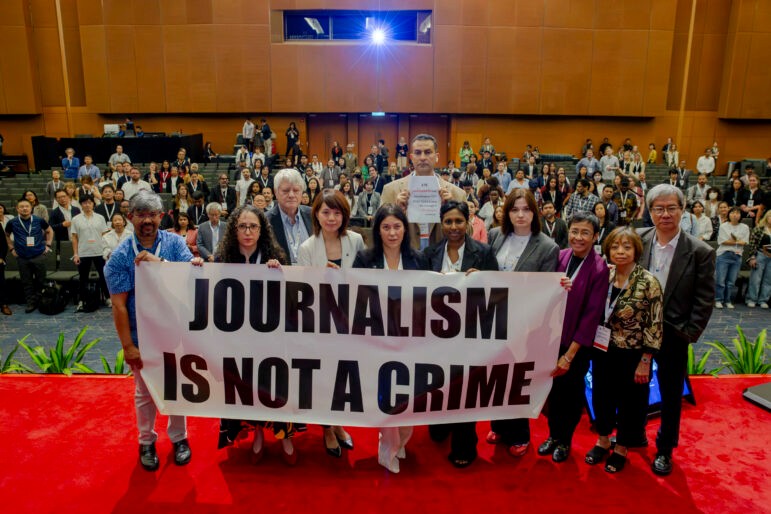
Before giving her speech, Ressa joined in a moment of solidarity with journalists under attack worldwide, organized in partnership with the Committee to Protect Journalists. She joined the more than 1,000 attendees gathered in the conference hall for a photo, in a symbolic recognition of the work being done by an investigative community holding the line for facts and accountability everywhere.

“Everything we knew as an industry has been destroyed,” she said. “So we don’t stand still. This is a time for radical collaboration. This is also a time for creation.” She added: “Our enemies are not the governments. They rose on top of technologies that have literally splintered our societies apart. None of the tech that rules our lives today is anchored in facts.”

Investigative journalism leaders joined together with the Committee to Protect Journalists for a moment of solidarity with the press worldwide at GIJC25. Image: Suzanne Lee, Alt Studio for GIJN
Her more specific appeals to the community included:
  • Journalists in the European Union should relentlessly hold their governments to their stated human rights and press freedom standards. “I look to those here from the EU: hold on, and don’t backslide with your good press laws.”
  • Reporters should investigate and expose the epidemic of online harassment of women journalists, and those who enable it. Ressa pointed out that 73% of women journalists experience online abuse, and 25% receive threats of physical violence — some of which transform into physical harm.
  • Newsrooms should do a frank assessment about the painful tradeoffs of social media. “How long do we want to keep working for the tech companies for free?” she asked. Rather, she said they should consider solutions like public interest tech stacks or audience meet-ups in which “real people can talk to real people without being manipulated by algorithms.”
  • Use investigations to challenge and stop the “surveillance-for-profit” industry.
  • Avoid — at all costs — further marginalizing groups via the press who are already marginalized in the physical world.

“My dream is a global federation of news organizations. I think we can do it — the code is there already,” she added. “All we have to do is work together while we still have strength. Otherwise, we will be depleted — and I think we only have a year.”

Resilience of the Investigative Journalism Community 

Ressa’s speech followed a conference welcome from leaders of the two co-hosts of the event: Emilia Díaz-Struck, executive director of the Global Investigative Journalism Network, and Premesh Chandran, co-founder of Malaysiakini.

“Despite all these challenges we’re facing… we are alive; we are resilient; and we are doing the investigative journalism that is key for society: holding powers to account.” — GIJN Executive Director Emilia Díaz-Struck

“We are so excited — this is the first time we are hosting the global conference in Asia,” said Diaz-Struck. “We know this was a tough year for everyone. But the fact that we have more than 1,500 attendees from 135 countries and territories sends a very powerful message.”

She noted that the conference had doubled its prior complement of speakers from Africa, MENA, and Latin America — and tripled the number of speakers from Asia.

Said Chandran: “In 2018, we here in Malaysia had our first change of government in 60 years, and that was driven by journalists. Many here have been pushing the boundaries.”

Diaz-Struck added: “Despite all these challenges we’re facing — democracy going backwards, wars, more journalists in exile — we are alive; we are resilient; and we are doing the investigative journalism that is key for society: holding powers to account.”

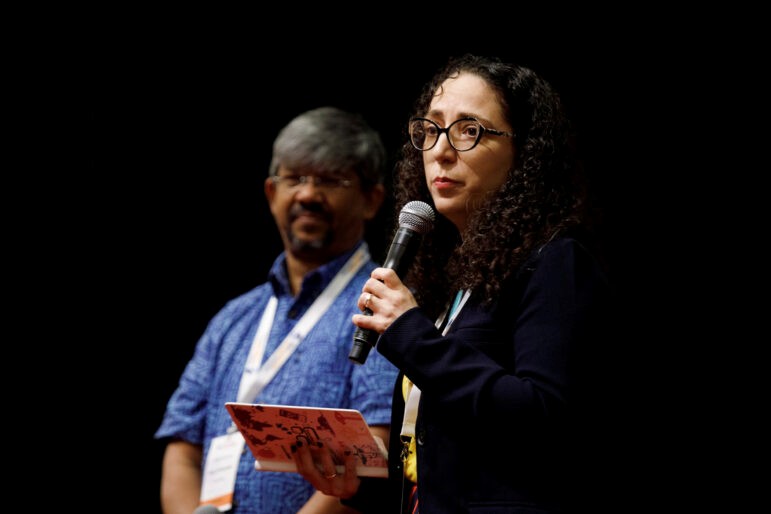
GIJN Executive Director Emilia Díaz-Struck (right) and Malaysiakini CEO and co-founder Premesh Chandran welcomed attendees to the 14th Global Investigative Journalism Conference. Image: Suzanne Lee, Alt Studio for GIJN
Source: GIJN - https://gijn.org/stories/gijc25-maria-ressa-keynote-address/

By Rowan Philp  Maria Ressa — a 2021 Nobel Peace Prize laureate, and co-founder of the pioneering investigative outlet Rappler — opened the 14th Global Investigative Journalism Conference (GIJC25) in Malaysia with a powerful call for the under-fire investigative reporting community to embrace “radical collaboration,” and to use the crisis as an opportunity for impact and survival. “Everything we knew as Latest News – MAKANDAY 

By Rowan Philp  Maria Ressa — a 2021 Nobel Peace Prize laureate, and co-founder of the pioneering investigative outlet Rappler — opened the 14th Global Investigative Journalism Conference (GIJC25) in Malaysia with a powerful call for the under-fire investigative reporting community to embrace “radical collaboration,” and to use the crisis as an opportunity for impact and survival. “Everything we knew as

Mtendere Residents Reject K200 Garbage Fee, Cite Illegal Charges and Poor Service Editor on November 20, 2025 at 6:13 pm

By Brenda Muzeya

A conflict is brewing in Lusaka’s Mtendere B, one of the city’s high-density neighbourhoods east of the capital, as residents protest what they describe as illegal and unaffordable garbage collection fees imposed by the Jojoda Multi-Purpose Cooperative Society.

Residents say the cooperative has increased monthly waste collection charges from K100 to K200, despite the law allowing a maximum of K70 per household. Many argue that even the previous K100 fee was difficult to afford, especially given the poor state of waste management in the area.

Area councillor for Mtendere Ward 34, Boniface Chibeka, confirmed the legal limits and attributed the persistent garbage problem to weak enforcement by both the cooperative and the Lusaka City Council.

“We are aware that the quality of garbage collection in Mtendere B is very poor, and it is because of lack of enforcement from the company and the Public Health Department of Lusaka City Council,” said Chibeka.

The cooperative’s representative, who requested anonymity, dismissed claims of overcharging and said that most residents pay, while some continue to dump waste indiscriminately due to financial constraints.

“We have a price list from Lusaka City Council and the Lusaka Integrated Solid Waste Management Company, but we have not received training on how to charge waste generators,” he said.

Lusaka Integrated Solid Waste Management Company says it is taking the matter seriously and has launched investigations.

“We will get to the bottom of this. Cooperatives are not supposed to overcharge their clients,” she said. 

She added that the company is shifting to digital payment systems to enhance transparency and curb abuse.

Meanwhile, during a recent workshop on enforcing the Solid Waste Regulation and Management Act No. 20 of 2018, Lusaka Integrated Solid Waste Management Company announced a collaboration with the Zambia Police Service to strengthen enforcement. The Act empowers police to arrest individuals and entities who dump waste illegally or operate without a waste collection licence.

Permanent Secretary of Local Government and Rural Development, Dr. Gabriel Pollen, urged the police to ensure full compliance.

“Our expectation from this workshop is clear, we must see a tangible change in civic behaviour,” Dr. Pollen said.

Despite the laws and workshops, garbage continues to pile up in Mtendere B and many other communities across the country. Residents say they feel abandoned by authorities and exploited by service providers who ignore legal limits.

MakanDay reached out to the Lusaka City Council for comment on whether complaints against the cooperative had been received and what action was being taken—but phone calls went unanswered.

As the standoff persists, Mtendere B residents are demanding fair charges, better oversight, and consistent waste management services to restore cleanliness in their community.

Brenda is an intern at MakanDay under the Free Press Initiative’s Journalism Graduate Internship Programme, which aims to promote excellence in journalism.

By Brenda Muzeya A conflict is brewing in Lusaka’s Mtendere B, one of the city’s high-density neighbourhoods east of the capital, as residents protest what they describe as illegal and unaffordable garbage collection fees imposed by the Jojoda Multi-Purpose Cooperative Society. Residents say the cooperative has increased monthly waste collection charges from K100 to K200, Latest News – MAKANDAY 

By Brenda Muzeya A conflict is brewing in Lusaka’s Mtendere B, one of the city’s high-density neighbourhoods east of the capital, as residents protest what they describe as illegal and unaffordable garbage collection fees imposed by the Jojoda Multi-Purpose Cooperative Society. Residents say the cooperative has increased monthly waste collection charges from K100 to K200,

Toxic Secrets of Sino Metals — A Chinese-Owned Mine in Zambia Editor on November 20, 2025 at 6:51 am

Building on the findings published in Part One, this follow-up reveals new evidence of disputed assessments, questionable compensation practices, and growing fears among affected farmers that the true scale of contamination is being concealed.

By Charles Mafa & Kennedy Mbewe

The Cover-Up and the Cost

“We have been told we can’t farm”

In September, the government commissioned Applied Science and Technology Associates to assess the environmental and socio-economic impact of the Sino Metals tailings dam failure.

The firm replaced Drizit, a South African company previously hired by Sino Metals before its contract was terminated. During the signing ceremony, Zambia Environmental Management Authority (ZEMA), Acting Director General Karen Banda-Etondo stressed the urgency of the exercise, while consultant Chilekwa Kampeshi said it would be guided by science.

But the sudden change of assessors, coupled with the government’s decision to take over responsibility for the clean-up, has raised questions. Critics fear the process may be designed to legitimise early compensation payouts and minimise the true scale of contamination.

“We have been told we can’t farm”

Residents who spoke to MakanDay accused government officials of colluding with the Chinese-owned company and quietly warning local farmers not to cultivate their land in the upcoming season, citing dangerously high levels of toxins in the soil.

“We have been told we can’t farm,” one farmer said, standing beside a field he can no longer use.

At first, both the government and Sino Metals downplayed independent findings that suggested the spill was far more extensive. But the damage has become impossible to ignore.

As previously reported by MakanDay, the U.S. Embassy later warned that the spill was far more severe than initially disclosed — estimating up to 30 times more toxic sludge was released than first reported. Both the mine and the government have disputed these figures.

“They were hired by the Chinese”

On the first attempt to reach Kalusale, the MakanDay team was forced to abandon the journey halfway as heavy trucks roared past at dangerous speeds, stirring up thick dust that reduced visibility to nearly zero.

Back in a safe zone, several residents expressed anger and despair over how the disaster has been handled.

“We lost everything, our fields, our water, even our peace,” said one resident. “They say it’s safe now, but look around, there is dust everywhere.”

“When the government sent officers from the district agriculture office to assess our fields, we thought they were here to help,” complained Bernard Njovu, 45. “But little did we know they had been engaged by the Chinese. They didn’t come to represent the people’s interests, they were hired by Sino Metals to conduct the evaluation on behalf of the company.”

Pressed for proof, he told MakanDay that if the government were truly acting in the public’s interest, it would have shared the findings of the evaluation report with the affected residents.

“They only assessed the section that was scorched by the acid and paid me K18,000 (about US$ 820),” he said. “But they went further and stopped us from harvesting the crops that were not even affected, it feels like government under Ministry of Agriculture stole our money.”

Ironically, while access to the contaminated zone remains heavily restricted, payments have already been made — without the affected communities knowing the scale of the pollution or the health risks they now face.

Sino Metals declined to discuss specific compensation details, saying it “was provided with the compensation report and associated costs, which it promptly settled”.

“The Ministry of Agriculture, other relevant ministries and relevant government agencies will be best suited to respond to this as they are the ones who carried out the assessment to ascertain the lost and resultant compensation,’’ said company spokesperson Chileya.

The Ministry of Agriculture has not yet responded to MakanDay’srequest for comment.

In a statement issued on October 30, Sino Metals maintained that all beneficiary farmers were briefed on the compensation process by officials from the Ministries of Agriculture and Livestock and Fisheries.

“The entire compensation process was conducted transparently and in full compliance with Zambian law and was covered by mainstream media. Currently, an independent Environmental Impact Assessment (EIA) commissioned by the Zambian government is underway to which Sino Metals is fully in corporation with whenever called upon,” the company said.

Lives contaminated, futures uncertain

A MakanDay survey involving over ten farmers revealed a consistent pattern: none of them had received any feedback on the outcome of the assessments, fueling suspicion that the process was designed to serve corporate interests rather than protect local livelihoods.

Gillian Namutowe, a farmer from Chendamabumba in Kitwe, lost all the fish in her two ponds — each about half the size of a football field and located downstream along the Kafue plains, 25 kilometres from Sino Metals. Her family’s well, their sole source of drinking water, was also tested, but she says the results have never been shared with her.

Another farmer, Monica Chikoloma of Mpata Hills in neighbouring Luanshya district, said she is uncertain about her health after eating dead fish from the Kafue River.

“I don’t know what’s happening to my body, I just feel very weak. Maybe it’s the fish, but many people here ate it,” she said.

According to BBC, an ongoing $80 billion lawsuit filed by more than 170 farmers against two Chinese-linked companies, including Sino Metals, accuses them of causing an “ecological catastrophe” following the collapse of a copper waste dam. However, the case risks collapsing due to prior settlement agreements some residents reportedly signed.

The farmers allege that the failure of the tailings dam — owned by Sino Metals in Chambishi, Kalulushi district — resulted from a combination of engineering flaws, poor construction, and operational mismanagement.

A South Africa–based environmental firm contracted by Sino-Metals to assess the extent of the spill found that the disaster released an estimated 1.5 million tonnes of toxic material.

In its draft report seen by MakanDay, the firm warned that a clean-up and restoration programme in areas contaminated with tailings, heavy metals, and acidic soils must be implemented urgently.

It further advised that, given the severity of the contamination, remediation should be carried out by certified specialists to prevent secondary pollution.

“If the toxic materials discharged into the environment are not immediately contained, there is a high risk they will spread even further through natural processes,” the draft report cautioned.

However, Sino-Metals told MakanDay that “Drizit environmental company breached the contractual terms and refused to rectify the violations, therefore, the company terminated the contract in accordance with the law”.

Regarding the volume of the leakage, the company referred MakanDay to an official statement issued by the Minister of Water Development and Sanitation on 18 September 2025.

This is our home — and our curse”

For residents like Njovu, Nsofwa, and Chikoloma, the spill is not just a story — it’s a daily reality written on their skin, in their throats, and in their empty fields.

“We have nowhere else to go,” said one resident quietly, looking toward the mine. “This is our home.”

The company said that, following the government’s latest restoration directive, it has undertaken systematic remediation and preventive measures under the guidance of relevant regulatory authorities, with significant progress reportedly achieved.

In October, ZEMA directed the company to build drainage and silt traps, stabilise the tailing dam, apply lime to affected fields, and remove sludge from the Chambishi Stream.

The assessment by new company Applied Science and Technology Associates aims to recommend remediation measures, but ZEMA has yet to respond to MakanDay’s questions on its progress.

Analysts warn that allowing companies to settle compensation before a full assessment sets a worrying precedent, effectively commercialising environmental harm and weakening Zambia’s environmental oversight system.

As part of MakanDay’s commitment to advancing and sustaining investigative journalism in Zambia, this story was developed in collaboration with Kennedy, a journalist with Hope Channel TV.

Building on the findings published in Part One, this follow-up reveals new evidence of disputed assessments, questionable compensation practices, and growing fears among affected farmers that the true scale of contamination is being concealed. By Charles Mafa & Kennedy Mbewe The Cover-Up and the Cost “We have been told we can’t farm” In September, the Latest News – MAKANDAY 

Building on the findings published in Part One, this follow-up reveals new evidence of disputed assessments, questionable compensation practices, and growing fears among affected farmers that the true scale of contamination is being concealed. By Charles Mafa & Kennedy Mbewe The Cover-Up and the Cost “We have been told we can’t farm” In September, the

?‘A Serious Misstep’: Zambia Sends Emoluments Chief to Lead Delegation at Tobacco Control Talks Editor on November 19, 2025 at 12:23 pm

By Sandra Machima in Geneva

As global leaders gathered in Geneva this week to chart the next phase of the world’s fight against tobacco-related deaths, Zambia arrived at COP11 with a move that stunned many in the international health community: it sent a senior official who has no background in public health, no mandate on tobacco control, and no institutional link to the country’s health sector.

While more than 1,400 delegates, including ministers of health, epidemiologists, addiction experts, and environmental specialists — convened to strengthen the WHO Framework Convention on Tobacco Control (WHO-FCTC), Zambia was represented by Chembo Mbula, Director General of the Emoluments Commission, a body responsible for salaries and conditions of service for public officers.

COP11, the eleventh Conference of the Parties to the WHO-FCTC, is the world’s highest decision-making forum on tobacco control, shaping Zambia’s legal obligations, access to global health support, and future public health policies. It brings together countries that have ratified the treaty to review progress, strengthen regulations, and adopt measures to curb tobacco use and nicotine addiction.

As a party to the convention, Zambia is obligated to protect public health policies from tobacco industry interference, strengthen its tobacco control laws, report progress, and send competent, health-focused delegates to these meetings. This context helps explain the concern sparked by Zambia’s decision to send representatives viewed as unqualified or lacking a public health mandate.

For many observers, it was a decision that spoke volumes about Zambia’s seriousness, or lack of seriousness, in confronting a tobacco epidemic that kills more than 8 million people globally every year and is driving rising rates of non-communicable diseases at home. And within hours of the opening ceremony, Zambia’s stance began to spark outrage.?

The opening ceremony featured a high-level strategic dialogue reflecting on two decades of progress under the FCTC, one of the most widely ratified treaties in UN history.

Acting Head of the WHO FCTC Secretariat, Andrew Black, noted that COP11 offers a critical opportunity to strengthen environmental protections, reduce tobacco consumption, tackle nicotine addiction, and protect populations from second-hand smoke.

During a ministerial roundtable hosted by Belgium, delegates raised urgent concerns about the rising nicotine addiction among young people, driven by e-cigarettes and new nicotine delivery systems.

Representing Zambia, Mbula argued that tobacco remains an economic lifeline for many rural households and continues to make a substantial contribution to national revenue. He called for “balanced policies” that reconcile public health objectives with socio-economic realities.

Mbula reiterated Zambia’s commitment to an inclusive approach to treaty implementation and supported the re-establishment of the working group for Parties, stressing that countries should prioritise completing and strengthening existing obligations before introducing new measures. He also warned that abrupt policy changes could disrupt livelihoods in developing countries where thousands depend on tobacco farming and related industries.

However, civil society organisations pushing for stronger tobacco control were left stunned. Many said Zambia’s position was completely at odds with the purpose of the meeting and undermined global public health efforts.

?

?Several delegates accused the Zambian team of “betraying the Zambian people” by siding with tobacco industry interests instead of defending public health. They argued that at a time when Zambia is grappling with rising non-communicable diseases, the country should have been represented by qualified public health experts—not officials with no background in health.

Tobacco Free Association of Zambia (TOFAZA) executive director Brenda Chitindi criticised the government’s choice of representative, saying Mr. Mbula’s delegation “misrepresented Zambia’s health priorities”.

She added that sending a delegation with no mandate or capacity to contribute meaningfully to the Convention’s work amounted to a waste of public resources, especially when “there is nothing to bring back home in terms of benefits, commitments, or progress for the Zambian people”.

Chitindi appealed directly to President Hakainde Hichilema to scrutinise the officials selected to represent Zambia on global platforms. Poor representation, she warned, not only undermines the country’s credibility but also “exposes the calibre of the nation” before the international community.

TOFAZA has called on the government to ensure that future delegations to global health conferences consist of competent, mandated, and sector-appropriate officials capable of advancing Zambia’s public health interests.

?

?“What does a meeting on public health have to do with someone from the Emoluments Commission when Zambia has a Ministry of Health, the custodian of health matters?” she asked.

Chitindi further cautioned that Zambia risks losing global health funding if it fails to demonstrate compliance with its treaty obligations, an outcome she said could jeopardise the health of millions.

In a separate interview, health expert Dr. Chrispin Sichone said Zambia was making steady progress on the Tobacco Control Bill, despite resistance from some interest groups. He stressed that healthcare remains the foundation of a stable nation and expressed confidence that Zambia would uphold its WHO obligations to protect public health.

A number of delegates linked to the tobacco industry were also seen at the event, raising additional concerns about possible industry interference—an act strictly prohibited under the WHO-FCTC, which Zambia has ratified.

By Sandra Machima in Geneva As global leaders gathered in Geneva this week to chart the next phase of the world’s fight against tobacco-related deaths, Zambia arrived at COP11 with a move that stunned many in the international health community: it sent a senior official who has no background in public health, no mandate on Latest News – MAKANDAY 

By Sandra Machima in Geneva As global leaders gathered in Geneva this week to chart the next phase of the world’s fight against tobacco-related deaths, Zambia arrived at COP11 with a move that stunned many in the international health community: it sent a senior official who has no background in public health, no mandate on

Toxic Secrets of Sino Metals — Inside Zambia’s Hidden Environmental Catastrophe Editor on November 19, 2025 at 7:03 am

The Spill, the Silence, and the Suffering

By Charles Mafa & Kennedy Mbewe

A settlement choked by dust and silence

In Kalusale, a poor settlement overshadowed by the Sino-Metals Leach Zambia copper mine to the east, the air hangs heavy with dust and a faint chemical stench. The maize fields that once brought life and colour to the landscape now lie barren and cracked.

Along the bumpy road leading into Kalusale, a cluster of makeshift homes—some legal, others informal, stand amid the haze. Outside one mud house, five women watch helplessly as trucks thunder past, hauling earth from a nearby pit and enveloping them in choking clouds of dust.

“This is our life now,” said Getrude Nsofwa, 51, her voice hoarse.

“We have become used to it, even though the cough never leaves.” Moments later, her words dissolved into a deep, rasping cough, a sound that seemed to echo the settlement’s silent suffering.

Another woman added: “The coughing, the stomach pains, the burning eyes, these are daily struggles we’ve simply learned to live with.”

According to a source at the mine, Kalusale lies within what was originally designated as a pollution control zone — an area where human settlement is prohibited. He said Sino Metals inherited this “legacy problem” from the era of the state-owned Zambia Consolidated Copper Mines (ZCCM), when residents were allowed to settle in the area.

Since 2008, efforts to relocate them, the source added, have been stalled due to political resistance and community opposition. Today, Kalusale even has a polling station, effectively recognising it as a settlement under Mwambashi Ward in Kalulushi district.

In October, the company informed a visiting delegation from the church mother bodies — the Zambia Conference of Catholic Bishops (ZCCB), the Evangelical Fellowship of Zambia (EFZ), and the Council of Churches in Zambia (CCZ) — that it plans to resettle residents living within the pollution control zone in collaboration with the Office of the Vice-President. However, there is no timeline that has been provided or formal commitment for the resettlement.

A disaster too big to bury

The challenges faced by Kalusale residents are only part of a much larger story — one that reached national attention earlier this year when disaster struck at the mine itself.

Nearly eight months have passed since the dam holding mining waste burst at Sino-Metals, a Chinese state-owned copper in Chambishi just outside Kitwe — unleashing what experts describe as one of Zambia’s worst mining-related disasters in recent years.

The spill released highly acidic waste laden with toxic heavy metals, contaminating a key river that serves as a major source of drinking water.

The company apologised and pledged to compensate affected residents. However, during her visit to the site in September, Vice-President Mutale Nalumango warned that “that may not be all,” emphasising that the safety of Zambians was “non-negotiable.”

But even as top officials pledged accountability, on the ground, silence and fear have begun to take hold.

Access denied, voices silenced

Residents like those interviewed by MakanDaysay their voices have been muted. Access to the affected area remains tightly restricted, with state police, mine security, and Chinese company officials barring journalists and community members from freely moving in and out.

Two journalists and a civic leader, Bernard Chisenga, who attempted to visit Kalusale to interview residents, were intercepted by police and taken to Chambishi Police Station for questioning. They were later released but cautioned not to return without clearance from the mine.

Before their detention, a group of women, eager to speak out, surrounded the journalists’ vehicle, pleading to be interviewed. Their conversation was abruptly cut short when a patrolling police officer intervened.

In an interview with MakanDay, Chisenga — a Kalusale zonal representative in Mwambashi Ward and vice-chairperson of the Ward Development Committee, said he could not understand why he was barred from performing his civic duties in his own community, which even hosts an election polling station.

“I was asked by the police if I had obtained permission from Sino Metals to be in the area,” he said. “They accused me of holding an illegal meeting, and of doing so in the wrong place.”

Sino Metals told MakanDay that “the area in question is a legally designated mining zone, subject to highly restrictive access control in accordance with the law — a standard practice across the global mining industry”.

Company Deputy Chief Executive Officer, Sydney Chileya, said the area is currently under a Government-led investigation, following the commissioning of an independent assessor to carry out an on-site Environmental Impact Assessment (EIA). He added that, due to thefts and illegal mining activities, “necessary restrictions and management measures have been implemented for security reasons.

The dust has settled in Kalusale, but the truth remains buried. In Part II:The Cover-Up and the Cost,” we follow the paper trail, the corporate denials, and the billion-dollar battle for justice behind Zambia’s most toxic mining scandal.

As part of MakanDay’s commitment to advancing and sustaining investigative journalism in Zambia, this story was developed in collaboration with Kennedy, a journalist with Hope Channel TV.

The Spill, the Silence, and the Suffering By Charles Mafa & Kennedy Mbewe A settlement choked by dust and silence In Kalusale, a poor settlement overshadowed by the Sino-Metals Leach Zambia copper mine to the east, the air hangs heavy with dust and a faint chemical stench. The maize fields that once brought life and Latest News – MAKANDAY 

The Spill, the Silence, and the Suffering By Charles Mafa & Kennedy Mbewe A settlement choked by dust and silence In Kalusale, a poor settlement overshadowed by the Sino-Metals Leach Zambia copper mine to the east, the air hangs heavy with dust and a faint chemical stench. The maize fields that once brought life and