i6204

i6204

Second Affliction: eSwatini govt abandons amputees after surgery Inhlase on November 17, 2025 at 1:55 pm

By Vuyisile Hlatshwayo

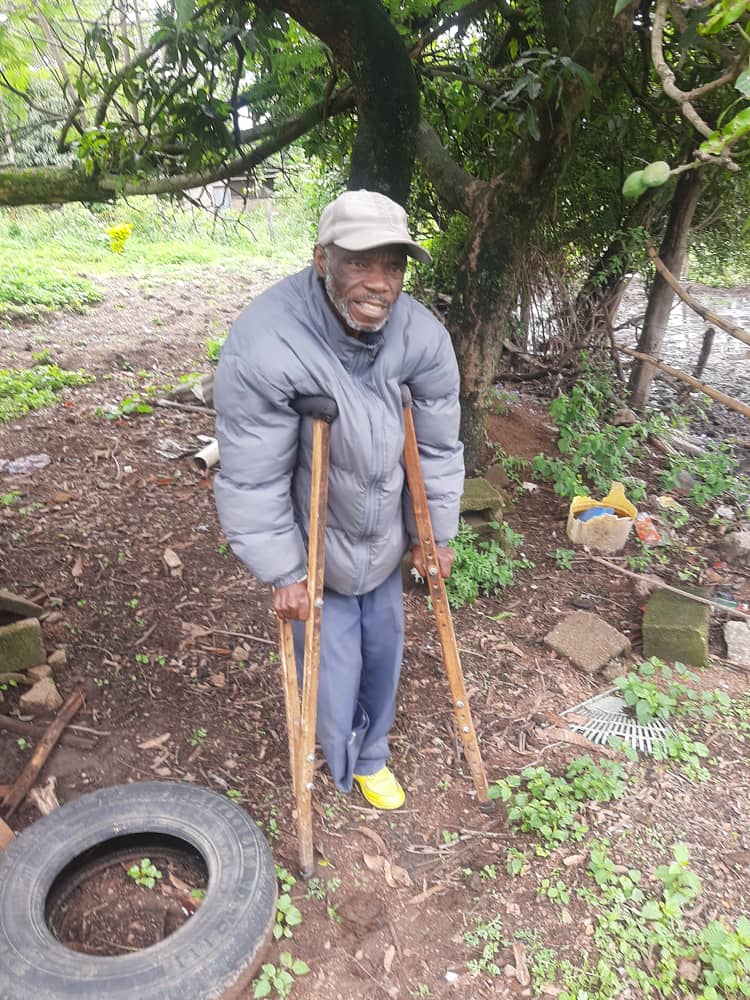
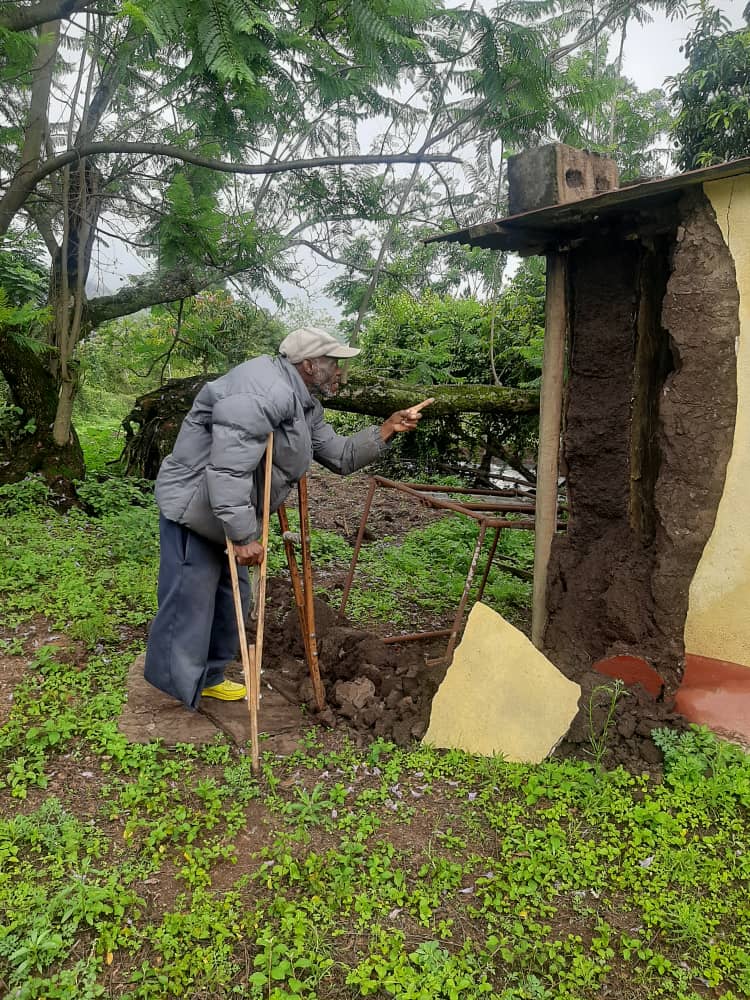
Sipho Dube (65) from Bethany says he left Raleigh Fitkin Memorial (RFM) Hospital in Manzini on crutches after losing his leg — but without the rehabilitation support he needed to recover. His case is not unique. 

Across eSwatini, amputees are discharged into communities with little to no follow-up care, a silent crisis unfolding far from the country’s policy promises.

eSwatini has 146,554 people with disabilities. Three in ten of them (38,905) have a mobility disability.

An investigation by Inhlase Centre for Investigative Journalism has uncovered a critical driver behind this neglect: the government’s long-standing failure to hire adequate rehabilitation professionals, particularly psychologists, leaving amputees without the support they need to survive and adjust after life-altering surgeries.

Apart from Dube’s case Inhlase documented other instances of neglect. After a train accident left Lubhuku resident Njabulo Maziya without both legs, he received neither rehabilitation nor compensation. 

In Shiselweni, rural health motivator Khanyisile Dlamini of Hhohho area reported that an amputee in her community died soon after hospital discharge due to complete lack of follow-up rehabilitation.

When reached for comment, Fikile Shongwe, Disability Manager at the department of social welfare revealed that the department has only one psychologist. Her department, Shongwe revealed, relies on the psychological support provided at government hospitals. 

In Parliament, Minister of Health Mduduzi Matsebula openly admitted that the entire public health system has only three psychologists, two of whom work in a psychiatric centre — leaving almost no support for amputees. 

Two nurses in Manzini and Lubombo corroborated the staffing crisis, revealing that Manzini had no government provided psychological counsellor available while the Lubombo had one.

Experts say psychological support is a cornerstone of rehabilitation—helping amputees cope with trauma, grief, lifestyle change, and disability.

“To ensure that the amputees receive comprehensive rehabilitative health services, our department continues to advocate for inclusive health,” Shongwe stated.

Requests by Inhlase to professional bodies, Eswatini Psychology Association (EPA) and Eswatini Medical and Dental Council (EMDC), for data on registered rehabilitation specialists went unanswered.

In addition to the lack of psychological support, many emaSwati with amputations face limited access to rehabilitation. Yet the services remain costly and out of reach.

While alternative services and healthcare facilities are found in urban areas through private clinics, amputees face a double jeopardy. Firstly, the costs and the difficulty in transportation worsen their plight. 

Nontobeko Makhukhula, project coordinator at the Federation of Disabled People of Swaziland (FODSWA), lamented the plight of amputees, paying more attention to diabetic patients with amputations whom she described as facing an insurmountable challenge. She confirmed that diabetic people with amputations find it costly to frequent the hospitals.  

With limited movement due to the amputation, many remain dependent on government grants, leaving with limited economic opportunities. While the government pays them a monthly E450 allowance, this is a pittance compared to the needs they have. Secondly, with the E450 grant, it is almost impossible for amputees to use private clinics where general consultations start from E400. 

“As many are unemployed, the measly E450 social grant is insufficient to cater for their basic needs,” observed Makhukhula. 

Their situation makes it worse to access the much-needed assistive devices which remain beyond reach for many. When Inhlase inquired with Comprehensive Prosthetics & Orthotics (CPO), eSwatini’s manufacturer of assistive devices, about the cost of a tailored prosthetic leg, the response was E20 000. With the social grant as their only income, an amputee would be required to save all their income for four years to afford a prosthetic leg. 

Dube added that he was unable to raise the E22 000 charged by Ekululameni at St. Joseph Ezimpofu for a prosthetic leg. As Makhukhula noted, there is no dedicated budget for the procurement and maintenance of assistive devices in the country. 
Makhukhula bemoaned that the free health services for persons with disabilities remain a buzzword as it has not yet been implemented to comply with the legal instruments. According to the 2017 Population and Housing Census Volume 6, 12,534 people with mobility disability are unemployed. 

The colonial-era dual health system persists, widening urban-rural disparities. With almost eight in ten  rural residents having access to only 23% of health workers, impoverished amputees continue to endure the indignity of socioeconomic exclusion due to unmet rehabilitation needs in a collapsing healthcare system.

Despite adhering to the Rehabilitation 2030 Initiative, a World Health Organisation (WHO) call for action to embed rehabilitation into the healthcare system and having ratified the Convention on the Rights of Persons with Disabilities (CRPD), which guarantees access to healthcare and rehabilitation and psychological support  for persons with disabilities near a person’s home, eSwatini is still far from meeting its obligations under these agreements. 

Locally, the National Disability Policy of 2013 and subsequent plans, such as the National Disability Plan of Action (NDPA) 2024-2028, promise free, comprehensive healthcare and assistive devices, including rehabilitation and counselling by qualified healthcare personnel at all levels of state healthcare, for persons with disabilities and their families. The National Persons with Disabilities Act No. 109 of 2018 reinforces these rights to equal access to healthcare. 

However, Inhlase’s investigation shows that these commitments only exist on paper.

The demand for rehabilitation services in eSwatini continues to grow due to rising chronic illnesses and injuries. The Ministry of Health Annual Budget Performance Report for Financial Year 2024/25 shows a steady increase in diabetes and hypertension diagnoses over the last three years along with persistently high rates of road accidents — all major contributors to amputations. Diabetes cases  increased from 1,606 in 2022, to 2,513 in 2024, while hypertension cases rose from 4,155 in 2022, to 7,587 in 2024. Recorded road accidents stood at 3,176 in mid-2024. 
Significantly subsidised by foreign aid, the US aid cuts have hard hit the poorly resourced state healthcare services. According to the UN Eswatini Joint Analysis of National Budget, the healthcare system is plagued by resource constraints. It attributed it to the trend of low health budgetary allocations over the years. It was E2.79 billion (11%) in FY 2023/24, E3 billion (10.2%) in FY 2024/25 and E3.10 billion (9.5%) in FY 2025/26, falling short of the African Union’s 15% target set in the 2001 Abuja Declaration. 

Interviewed at Lobamba Lomdzala Chief’s Council (bandlancane) meeting, retired Ministry of Tourism and Environmental Affairs Principal Secretary Emmanuel Dlamini criticised the concentration of services in urban areas and questioned the government’s slow efforts to decentralise healthcare to rural communities.

Stigma and cultural beliefs deepen discrimination, as amputees are often viewed as cursed or associated with witchcraft, leading to social exclusion. Dlamini (Emmanuel) highlighted a lack of community understanding and cultural beliefs surrounding disability in society. He underscored that discrimination stemmed from cultural beliefs behind the causes of disability. Dlamini (Khanyisile) shared the same sentiments, noting that families and community members avoid an amputee because of the bad luck of having one’s limb ‘buried’ before death.

While other African countries have made strides in delivering rehabilitation healthcare services, eSwatini lags behind in the adoption of digital rehabilitation to overcome these barriers. Digital rehabilitation prioritises the use of online and other virtual platforms in the health sector. The National Health Sector Strategic Plan (NHSSP) 2024-2028 promotes the use of digital technology in healthcare. It aims to ensure universal access and utilisation of acceptable, affordable, effective, equitable, and efficient promotive, preventive, curative, rehabilitative, and palliative health services for all populations in eSwatini. 

Experts acknowledge its potential but question its suitability for impoverished populations. Clinical psychologist Ndoniyamanzi Mdlalose and FODSWA’s Makhukhula have mixed feelings about the use of digital rehabilitation. The psychologist expresses dissatisfaction with its efficacy in eSwatini. Considering that 85% of people with disabilities are not engaged in economic activities, Makhukhula raises the concern of the unaffordability of smartphones. However, she does not discount that online healthcare services can foster a positive patient-healthcare provider relationship good for addressing the unmet rehabilitation needs of people with amputations.

Faced with climate-induced disasters, eSwatini can no longer overlook rehabilitation in its response to emergencies. Rehabilitation becomes critical due to traumatic or surgical amputations caused by the natural disasters. WHO experts emphasise that rehabilitation not only aids physical recovery but also addresses psychological trauma, helps rebuild community infrastructure, and restores dignity to affected people. Rehabilitation is crucial for universal health coverage and is a key strategy for achieving Sustainable Development Goal 3 seeking “to ensure healthy lives and promote well-being for all at all ages.”

Access to healthcare is a fundamental right, yet disparities persist for emaSwati with a total of 38,905 amputees, of whom 87% live in rural areas compared to 13% in urban areas. They continue to struggle with significant healthcare disparities and endure the indignity of social exclusion. 

​Inhlase  

By Vuyisile Hlatshwayo Sipho Dube (65) from Bethany says he left Raleigh Fitkin Memorial (RFM) Hospital in Manzini on crutches after losing his leg — but without the rehabilitation support he needed to recover. His case is not unique.  Across eSwatini, amputees are discharged into communities with little to no follow-up care, a silent crisis

A Neglected and Underestimated Multi-Billion-Dollar Sector Editor on November 15, 2025 at 6:35 am

By Gibson Zulu
Zambia’s Film Industry Suffers from Lack of Political Will

Zambia’s film industry stands at a critical crossroads, brimming with creative talent yet hamstrung by the absence of a clear and sustainable financing framework. Stakeholders are now calling for the establishment of a National Film Fund, warning that without government-backed investment, the country risks forfeiting its share of a global multi-billion-dollar sector capable of driving job creation and economic growth.

For decades, Zambian filmmakers have told the nation’s stories with minimal support. From the days of Banja, Frank Sibuku’s iconic production capturing Zambia’s cultural life, to contemporary dramas like Zuba, Mpali, and Ubuntu under MultiChoice Zambia’s Zambezi Magic, the industry has proven its capacity for growth and audience appeal. Yet behind these successes lie mounting challenges: soaring production costs, limited access to professional equipment, and the near-total absence of structured financing for creators.

In Parliament, Nkana Independent Member of Parliament (MP) Binwell Mpundu recently moved a motion to establish a National Film Fund, describing the film sector as an “underestimated multi-billion-dollar opportunity” key to job creation and aligned with the President’s call for every sector to contribute to employment growth. Kamfinsa MP Christopher Kang’ombe supported the motion, stressing the need for targeted government intervention in the creative industries.

But the idea faced resistance. United Party for National Development (UPND) MPs Brian Kambita (Zambezi East) and Alex Katakwe (Solwezi East) dismissed the proposal, arguing that “funding the film sector is not an immediate priority” and insisting that limited government resources should first be directed to pressing developmental challenges. They proposed that filmmakers rely on the Constituency Development Fund (CDF) or international grants instead of seeking a dedicated national fund.

Industry leaders strongly disagree. National Arts and Media Association (NAMA) President Morgan Mbulo told MakanDay that the issue is not a lack of money but a lack of political will.

“If agriculture can thrive through FISP and SAFF, then film too deserves structured funding through a Film and TV Levy Commission,” he said he said, urging lawmakers to reintroduce the motion and give industry players a chance to present evidence on the sector’s economic potential.

Filmmaker Paul Willo, producer of Maria Khristu and Service to Heart, also criticised the parliamentary debate, saying some MPs opposed the motion out of misunderstanding.

“It’s time we ended the culture of opposing without understanding, especially in a law-making house,” he said. Willo questioned whether policymakers fully appreciate the value of artists, noting that when film is prioritised, it uplifts the entire creative ecosystem, from fashion and makeup to visual arts and music.

Mbulo, Willo, and other producers, actors, and writers form a growing coalition pushing for the revival of Mpundu’s Film Fund motion. They say that beyond entertainment, the film industry is a viable creative business sector capable of generating substantial employment and contributing meaningfully to Zambia’s GDP—if only the government recognises it as such.

Filmmakers now hope that the UPND government and parliament will rethink their stance, embrace film as a strategic industry, and invest in a sector that holds both cultural significance and vast economic potential.

By Gibson Zulu Zambia’s Film Industry Suffers from Lack of Political Will Zambia’s film industry stands at a critical crossroads, brimming with creative talent yet hamstrung by the absence of a clear and sustainable financing framework. Stakeholders are now calling for the establishment of a National Film Fund, warning that without government-backed investment, the country Latest News – MAKANDAY 

By Gibson Zulu Zambia’s Film Industry Suffers from Lack of Political Will Zambia’s film industry stands at a critical crossroads, brimming with creative talent yet hamstrung by the absence of a clear and sustainable financing framework. Stakeholders are now calling for the establishment of a National Film Fund, warning that without government-backed investment, the country

Behind the meltdown: Miller v Moti, McGowan and the JSE

A seemingly suicidal corporate crusade by upstart miner Mike Miller has thrown up evidence suggesting controversial businessman Zunaid discussed cutting dodgy backroom deals with the erstwhile CEO of property group Rebosis.  Recordings and extensive documentation show how controversial businessman Zunaid…

Inside Eswatini’s Drug Shortages  Inhlase on November 12, 2025 at 7:32 am

By Zwelethu Dlamini

While stories of drug shortages in Eswatini may sound like a broken record, the crisis has reached a point where repetition has become an indictment. After years of excuses — from “delayed tenders” to “budget constraints” — the truth is starker: the very officials and suppliers entrusted to ensure the steady flow of medicines have instead entrenched dysfunction, negligence, and corruption.

A forensic audit, a tense procurement meeting, and testimonies from suppliers have now shown that the problem is not scarcity — it is failure of leadership and accountability at every level.

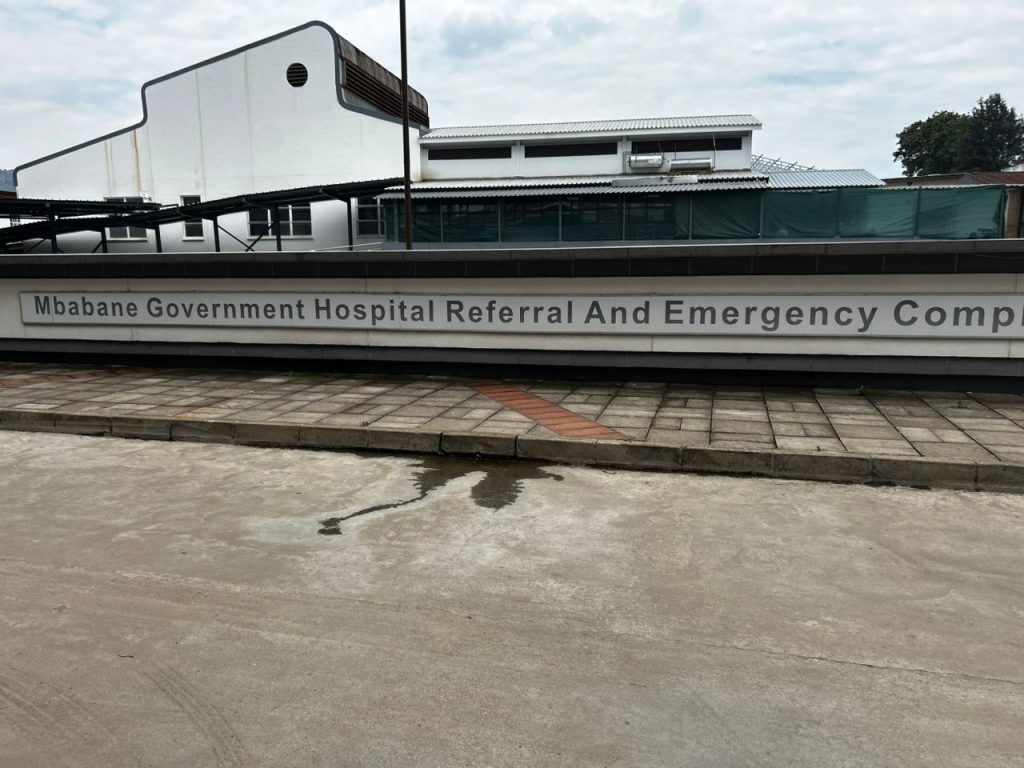
At dawn on a sunny Thursday, 18 September 2025, Sergio Khoza, a Mozambican migrant, walked from Gobholo, a location about three kilometers from the Mbabane Government Hospital. By 11 a.m., when he was finally attended, his blood pressure was spiking. He received one tablet but was told not to take it on an empty stomach. He used his last E3 to buy an apple. When his prescription came, the hospital pharmacy shelves which used to store the medication he was prescribed were empty and was advised to buy them from a private pharmacy in town.

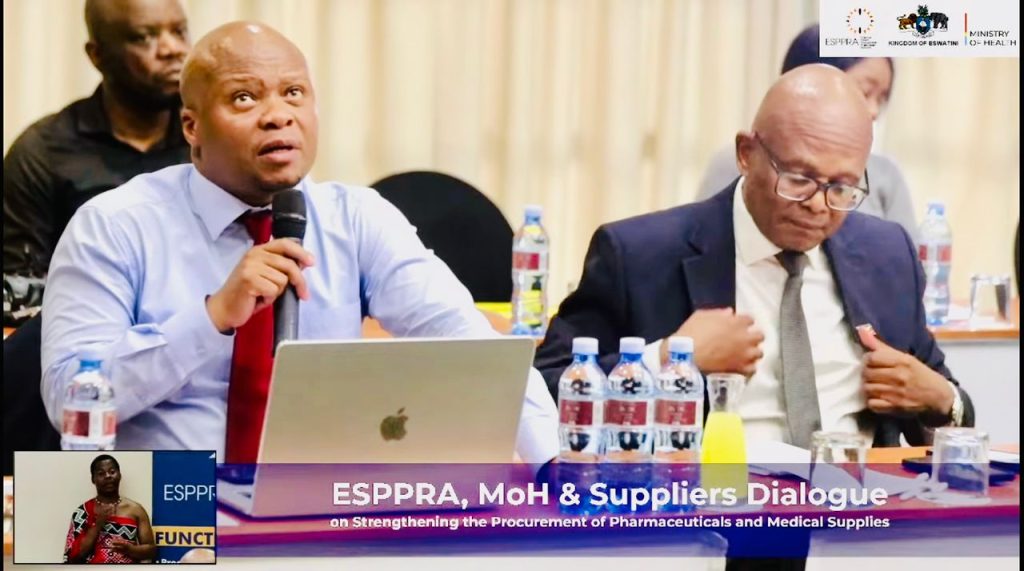
On 19 September 2025,  a day after Khoza and many other patients had been referred to private  pharmacies, the Eswatini Public Procurement Regulatory Authority (ESPPRA) convened a meeting bringing together health officials, Treasury, and suppliers to confront the crisis. What emerged was not a dialogue but a confession.

“Procurement is not about punishing anyone,” said ESPPRA CEO Vusumuti Matsebula. “It is about fairness and accountability. The health sector cannot afford shortcuts.”

The meeting followed the Funduzi Forensic Investigation, commissioned by the Auditor-General in 2024, which found E517 million in medicines paid for but never delivered, E83 million in expired stock, and E68 million in duplicate payments. Investigators confirmed bribery, collusion, and fruitless expenditure across the supply chain — from the Central Medical Stores (CMS) to senior ministry officials.

Principal Secretary Khanya Mabuza admitted that the shortages were “years in the making.”

“We cannot be discovering shortages from newspapers while suppliers hold orders,” he said. “Procurement and supply have become the missing link in our health system.”

Procurement specialist Lovemore Magagula conceded that “emergency procurement” — meant only for crises — had become routine.

“Emergency means unforeseen,” he said. “But we defended ourselves with excuses — COVID-19, border closures, staff shortages. That is not an emergency. We must move back to proper planning.”

The ministry of health financial controller confessed that deliveries were done without purchase orders between 2021 and 2023. — a violation of procurement law.

“There were deliveries that were done without any formal POs… we flouted the procurement procedures. We used delivery notes to commit to the government.” 

Because the regulator refused to retroactively approve such flouted payments, she said, the government is now handling those cases individually.

Suppliers’ contradictions

The ministry promised to enforce its contracts with suppliers to ensure timely delivery of medical supplies. However, the suppliers pointed out several inefficiencies within the ministry that made it almost impossible for them to meet their contractual obligations.

Nkosinathi Dlamini of ASD Medical revealed that adjudication delays often make delivery impossible:

“Sometimes we get orders in February, with the financial year ending in March. That gives us less than 90 days to deliver.”

Kerwin Fortune, of Pharm Industry, added that manufacturers don’t stockpile ingredients. “Add production and shipping — 90 days is unworkable without upfront deposits.”

Yet Prashant from Artemis Pharmaceuticals illustrated how bureaucracy and waste feed each other.

“While patients are told there are no drugs, dozens of medicines are expiring in my warehouse. CMS refused to collect them because it was doing a stock-take — from February to April — for two and a half months when no deliveries were accepted. When it ended, they told us our tender had expired.”

Some of those drugs, he said, have been in Artemis’s warehouse for eight months, unsellable on the private market.

Corruption and weak leadership

At the heart of the dysfunction is corruption that no one has yet punished.

“Who are the recipients? Officials. Who are the givers? Suppliers. It puts us in one basket,” PS Mabuza admitted. “There’s a high perception of corruption. It tempts us. We are not angels.”

Mayibongwe Masangane, Secretary-General of the Swaziland Nurses Association (SNA), said:

“The major challenge is corruption. Investigations never reach completion. How can we have stockouts while procurement officers sit idle? Until the Ministry acts on those findings, patients will keep suffering.”

He said the government should pay suppliers on time and strengthen procurement management.

“We are not focusing on corruption. Nothing is being done about it — yet there are reports pointing out corruption,” he lamented.

A leadership crisis- CANGO

Civil society sees the stalemate as a failure of governance, not logistics. Thembinkosi Dlamini, Director of Coordinating Assembly of Non-Governmental Organisations (CANG)), said Eswatini’s drug shortage “is a national emergency under the law.”

He cited the National Disaster Management Act, 2006, which empowers the Prime Minister to declare a health crisis and convene a multi-stakeholder task force.

“If this had been treated as a national disaster, the bottlenecks would have been cleared months ago. Leadership failed to use the very instruments that exist to solve the crisis.”

CANGO noted that data-driven planning remains absent. Eswatini continues ordering the same antibiotics despite resistance data showing declining efficacy — a practice contradicting Sustainable Development Goal (SDG) 3.B, which urges developing countries to ensure access to affordable, effective medicines and to strengthen pharmaceutical systems in line with the Doha Declaration on TRIPS and Public Health.

Government promises, public doubt

The Ministry of Health insists reforms are underway. Its 2024/25 report shows CMS’s order fill rate improving from 39 to 50 percent and stockouts falling slightly. A consultancy, PICMA, has been hired to transform CMS into a semi-autonomous agency.

Health Minister Mduduzi Matsebula told Parliament on 16 October 2025 that new laws will “tighten accountability for under-performing suppliers,” and that reforms will attract more pharmaceutical investors.

Meanwhile on November 7, the minister further announced that drug supply was at 80 per cent in hospitals. Ironically at around the same time government suppliers had held a picket to the treasury demanding their payments which were overdue.

​Inhlase  

By Zwelethu Dlamini While stories of drug shortages in Eswatini may sound like a broken record, the crisis has reached a point where repetition has become an indictment. After years of excuses — from “delayed tenders” to “budget constraints” — the truth is starker: the very officials and suppliers entrusted to ensure the steady flow

Munali mine protest pays off Editor on November 11, 2025 at 3:48 pm

By Clement Mudaala in Mazabuka.

Over 500 Munali Nickel Mine workers held a peaceful protest yesterday in Mazabuka district, demanding payment of their outstanding salaries and remittances of statutory contributions owed to NAPSA, NHIMA, and Saturnia Regna Pension Fund.

In July this year, the workers were sent on indefinite leave and were promised continued monthly payments.

But four months down the line, the workers are now up in arms for going three months without salaries, despite pay slips that indicate statutory deductions.

Gathering at the mine’s main gate with police permission, the protesters expressed frustration over what they described as “neglect” by management and government authorities.

The workers allege that the current management has failed to engage them despite repeated requests for dialogue.

And in a dramatic turn of events, responding to yesterday’s protest, area member of parliament Garry Nkombo undertook a lightning visit to the site after seeing the demonstration on television.

To his credit, Mr. Nkombo was able to calm the situation, announcing that a crisis meeting would be held this afternoon (11th November) at parliament buildings at Lusaka’s Manda Hill, involving representatives from the ministry of mines, ministry of labour, ministry of housing, Albidon management, and workers’ unions to address the matter.

At the time of going to press, the meeting was still underway, while details of the meetings’ discussions or conclusions are as yet undisclosed.

“People have been chased out of their rented houses and are now keeping their belongings in bars. I’m from Kafue, but I feel the pain of those who came from the Copperbelt — I’m keeping properties for 16 people. We’re here at our own mine gate, yet the management has locked us out in our own country,” one worker lamented.

Another worker added: “For three months, we haven’t been paid. Our pay slips show deductions for Saturnia, NHIMA, and NAPSA, but when we check, the funds have not been remitted. We are appealing to the president to intervene — we are suffering.”

The mine was placed into voluntary liquidation in September 2025 with previous operators, Mabiza Resources, giving up operational control to current mine leaseholders, Albidon Mining Limited.

Mabiza Resources had operated the mine as a subsidiary of UK-based Consolidated Nickel Mines (CNM). (see https://makanday.org/new-hope-for-closed-munali-nickel-mine/)

Union chairperson Misheck Matebele said the situation has become dire, with many workers evicted from their homes and struggling to survive.

“Workers were sent home and promised to be paid, but up to now, nothing has been received. NAPSA and Saturnia contributions were not remitted, and salaries remain unpaid. Over 500 workers are affected,” Matebele stated.

He further revealed that government had released K20 million to the Zambia Revenue Authority (ZRA) for the workers’ benefit payments, but the funds have allegedly been withheld due to claims from creditors.

“We are appealing to government to direct ZRA to release the money. That money is ours — it’s from our own sweat,” Matebele declared.

According to a worker, police had earlier refused to accompany the protesting workers in their quest to meet management, unless they were provided with lunch allowances — an action condemned by both the workers and area MP Garry Nkombo.

By Clement Mudaala in Mazabuka. Over 500 Munali Nickel Mine workers held a peaceful protest yesterday in Mazabuka district, demanding payment of their outstanding salaries and remittances of statutory contributions owed to NAPSA, NHIMA, and Saturnia Regna Pension Fund. In July this year, the workers were sent on indefinite leave and were promised continued monthly Latest News – MAKANDAY 

By Clement Mudaala in Mazabuka. Over 500 Munali Nickel Mine workers held a peaceful protest yesterday in Mazabuka district, demanding payment of their outstanding salaries and remittances of statutory contributions owed to NAPSA, NHIMA, and Saturnia Regna Pension Fund. In July this year, the workers were sent on indefinite leave and were promised continued monthly

Empty Benches, Broken Promises, & Suspensions Editor on November 11, 2025 at 7:14 am

Inside Zambia’s Troubled Parliament

By McStan Ng’andu,

From Katete to Shang’ombo, from Chavuma to Nakonde, citizens still wait for the promises their MPs once made. But inside parliament, empty benches and political theatre are drowning out the voices of the very people who sent them there.

When Agnes Mwale, a small-scale farmer from Mkaika Constituency in Katete, cast her vote in 2021, she did so with conviction. Her MP had promised to speak for rural communities like hers, to ensure timely farming inputs, better feeder roads, and staffed clinics. Four years later, she cannot remember the last time she saw her representative.

“We only see them when someone dies or during campaigns,” she says quietly. “So, who is speaking for us in that house?”

Her frustration echoes across Zambia, where citizens are questioning whether Parliament still represents them, or merely serves the political parties that control it.

The official explanation vs reality

Zambia’s National Assembly has 167 members — 156 elected, eight appointed by the President, and three ex-officio (the Vice-President, Speaker, and one Deputy Speaker). MPs are expected to divide their time between the House and their constituencies, addressing community needs while shaping national policy.

Yet the House has increasingly become an empty shell. Responding to MakanDay’s query on poor attendance, Stephen C. Kawimbe, in a written response on behalf of the Clerk of the National Assembly, said that the absences are often misunderstood. Standing Order 187(1), he explained, allows the house and its committees to sit concurrently, meaning some MPs may appear absent from the main Chamber while in fact attending committee meetings.

“Such instances are often misunderstood by the public as absenteeism, when in fact Members are discharging their parliamentary duties in another forum of the House,” said Kawimbe.

He added that virtual participation under Standing Orders 25(3) and (4) is counted as attendance.

However, MakanDay’s observations during sittings in July and August tell a different story. Parking bays outside Parliament were mostly empty, and on several days fewer than half the MPs were in the Chamber. Late arrivals and early departures were routine.

The Clerk of the National Assembly maintained that attendance records are not published “to avoid misinterpretation,” but assured that internal monitoring systems are in place. However, without public access to these records, questions about accountability remain unanswered.

While the Clerk said attendance data is withheld “to avoid misinterpretation,” he insisted it is monitored internally. Without public disclosure, though, accountability remains opaque.

Some lawmakers admit the issue runs deeper than registers and standing orders. Independent MP Emmanuel Banda of Muchinga Constituency said many MPs “reduce their role to following party instructions,” becoming “delegates without responsibility”.

“Some MPs do represent their people passionately,” Banda said, “but others lose touch the moment they step into Lusaka.”

PF MP Sunday Chanda of Kanchibiya agreed. “If MPs are absent during debates or remain silent when critical laws are passed, whose voice are we hearing? It certainly isn’t the people’s.”

Both men argue that democracy suffers when parliament becomes an echo chamber of party directives instead of citizens’ interests.

“Democracy suffers when MPs become mere extensions of party machinery,” said Chanda. “Party positions matter, but they should never blind us to the constitutional duty we owe to the people.”

Indiscipline and political tensions

Absenteeism is only the surface of a wider malaise. Even when MPs show up, parliamentary sessions often descend into spectacle — walkouts, shouting matches, personal insults, and near-physical fights have become common.

The most recent case involves Nkana MP, Binwell Mpundu, who has been handed two concurrent suspensions, one for 14 days and another for 30 days, after referring to the national assembly as “useless” and calling his Mongu Central counterpart, Oliver Amutike, “mad”.

Another controversy surrounded Jean Chisenga, PF MP for Mambilima, who was allegedly assaulted by ruling-party cadres on 12 September 2025, during President Hakainde Hichilema’s address opening the fifth session. Chisenga, previously suspended twice for indiscipline, declined to respond to MakanDay’s requests for comment.

Two other PF MPs, Francis Kapyanga (Mpika) and Mutotwe Kafwaya (Lunte), were also suspended in September — one for accusing the Speaker’s office of bias, the other for disorderly conduct.

Such episodes, frequent and public, have damaged parliament’s image as a place of reasoned national dialogue.

Dignity in decline

Veteran politicians lament the erosion of parliamentary decorum. Wynter Kabimba, lawyer and former Justice Minister, recalls a time when debates were marked by discipline and mutual respect.

Kabimba described the modern legislature as combative and self-serving.

“Parliament is not a contest between individuals or groups. It is a platform where the opposition, ruling party, and other representatives should converge to resolve issues affecting citizens,” he stressed.

Analysts outside parliament share this view. They see the turmoil not as isolated behaviour, but as a symptom of a deeper institutional sickness rooted in partisanship.

Political analyst Sipho Mwanza observed that Zambia’s legislative dysfunction is rooted in partisanship.

“MPs are often torn between doing what their party wants and what the people need. That tension weakens genuine representation,” he said. “Those who dare to break ranks often face political isolation, suspension, or backlash.”

Civil society alarm

Civil society organisations have also taken notice, warning that without reform, the very idea of representative democracy is at risk.

Groups such as the Alliance for Community Action (ACA) and the Governance, Elections, Advocacy and Research Services Initiative (GEARS Zambia)p have long sounded the alarm over parliament’s falling standards.

Jimmy Maliseni, ACA’s programmes manager, said Zambia’s most disciplined parliament was under the Movement for Multi-Party Democracy (MMD).

“Now things have reached a point where MPs are calling each other names using unpalatable language, so you can easily plot deteriorated etiquettes from 2011 to date we are not here by accident,” he said.

“The current mechanisms, where misbehaving MPs are suspended for a few days only to return as though nothing happened, while still getting paid, are not sufficient or fair,” he argued.

Patrick Kaumba, executive director of GEARS Zambia, agreed that little has changed despite transitions of power.

“Debates are still marred by disorderly conduct and walkouts,” he said.

The Jesuit Centre for Theological Reflection (JCTR) and National Youth Constitutional Assembly (NYCA) have called for reforms, including stricter enforcement of standing orders and ethical training for MPs, but these proposals have rarely been acted upon.

The people wait

For citizens like Mwale in Katete, the crisis in parliament is not abstract, it is lived. The road to her village is still washed out. The clinic still runs without enough nurses. The farming inputs she hoped her MP would fight for still arrive late.

“Maybe they forget us,” she says. “Maybe once they reach Lusaka, they stop seeing the people who sent them there.”

McStan is a talented journalist based in Choma with Byta FM radio. She recently completed a three-month paid internship at MakanDay after emerging third in the prestigious 2024 MakanDay Media Awards.

Inside Zambia’s Troubled Parliament By McStan Ng’andu, From Katete to Shang’ombo, from Chavuma to Nakonde, citizens still wait for the promises their MPs once made. But inside parliament, empty benches and political theatre are drowning out the voices of the very people who sent them there. When Agnes Mwale, a small-scale farmer from Mkaika Constituency Latest News – MAKANDAY 

Inside Zambia’s Troubled Parliament By McStan Ng’andu, From Katete to Shang’ombo, from Chavuma to Nakonde, citizens still wait for the promises their MPs once made. But inside parliament, empty benches and political theatre are drowning out the voices of the very people who sent them there. When Agnes Mwale, a small-scale farmer from Mkaika Constituency

Update following Moepathutse complaint to Press Ombud

The amaBhungane series about the Independent Development Trust and former Minister Sihle Zikalala has been updated following a complaint by Moepathutse Property Investments. Read the updated article here: Following a ruling by Deputy Press Ombud Tyrone August, amaBhungane has…

Zambia’s Lobito Corridor Set to Transform Regional Trade Editor on November 7, 2025 at 6:30 am

By Linda Soko Tembo

Zambia is on the verge of an economic transformation as the European Union (EU) throws its full support behind the Lobito Corridor — a multimillion-dollar transport and trade route designed to connect Zambia, Angola, and the Democratic Republic of Congo (DRC) to regional and global markets.

The initiative aims to turn Zambia into Southern Africa’s next major trade and logistics hub, linking its mineral wealth and agricultural products to the Atlantic Ocean through Angola’s port of Lobito.

Speaking ahead of the EU–Zambia Business Forum scheduled for November 12–14, 2025, EU Ambassador to Zambia and special representative to COMESA, Her Excellency Karolina Stasiak, described the Lobito Corridor as a “game-changing infrastructure initiative” that will accelerate trade, attract investment, and create thousands of local jobs.

Supported under the EU’s Global Gateway initiative, the Lobito Corridor is envisioned as Africa’s first open-access, transcontinental railway, promoting transparent, competitive, and sustainable trade. The corridor will enable faster and more efficient exports of Zambia’s minerals, agricultural produce, and manufactured goods — cutting transport costs and boosting the country’s competitiveness.

 “The Lobito Corridor is not just a transport project it’s an economic transformation opportunity that will bring cheaper logistics, improved access to markets, and increased economic activities along the route that can create jobs and opportunities, especially for young people,” said Ambassador Stasiak during Wednesday’s breakfast meeting in Lusaka.

The corridor is a joint effort by the governments of Angola, Zambia, and the DRC, with support from the EU, the United States, the African Development Bank, and the Africa Finance Corporation. It forms part of the broader Lobito Economic Corridor, which will open new investment avenues in agri-food processing, energy, skills development, and eco-tourism, among others.

Strategically, the project links Zambia’s Copperbelt and North-Western provinces to Angola’s Lobito Port, providing the country’s mining heartlands with a direct export route to the Atlantic. The EU believes this infrastructure will help Zambia transition from a landlocked to a “land-linked” nation, a vision aligned with the government’s Eighth National Development Plan.

Preparatory works are already underway. Angola and Congo are rehabilitating existing rail lines, while Zambia is completing feasibility studies to connect to the network. The EU is also supporting capacity building for Zambian businesses to prepare them for the economic opportunities the corridor will bring.

The upcoming EU–Zambia Business Forum, celebrating 50 years of EU–Zambia partnership, will bring together more than 600 delegates — including President Hakainde Hichilema, EU Commissioner for International Partnerships Jozef Sikela, and EIB Vice President Karl Nehammer— to discuss trade, mining, agriculture, and energy with a focus on Environmental, Social, and Governance (ESG) standards.

“We are seeing huge interest from European companies eager to explore opportunities in Zambia this forum will help build partnerships that promote sustainable investment, good governance, and shared prosperity,” she said.

As Zambia positions itself as a regional transport and trade hub, the Lobito Corridor emerges not merely as a physical link but as a symbol of economic renewal — connecting Zambia’s local industries to global markets and laying the foundation for inclusive growth across Southern Africa.

By Linda Soko Tembo Zambia is on the verge of an economic transformation as the European Union (EU) throws its full support behind the Lobito Corridor — a multimillion-dollar transport and trade route designed to connect Zambia, Angola, and the Democratic Republic of Congo (DRC) to regional and global markets. The initiative aims to turn Latest News – MAKANDAY 

By Linda Soko Tembo Zambia is on the verge of an economic transformation as the European Union (EU) throws its full support behind the Lobito Corridor — a multimillion-dollar transport and trade route designed to connect Zambia, Angola, and the Democratic Republic of Congo (DRC) to regional and global markets. The initiative aims to turn